


- Afhalen na 1 uur in een winkel met voorraad
- Gratis thuislevering in België vanaf € 30
- Ruim aanbod met 7 miljoen producten
- Afhalen na 1 uur in een winkel met voorraad
- Gratis thuislevering in België vanaf € 30
- Ruim aanbod met 7 miljoen producten





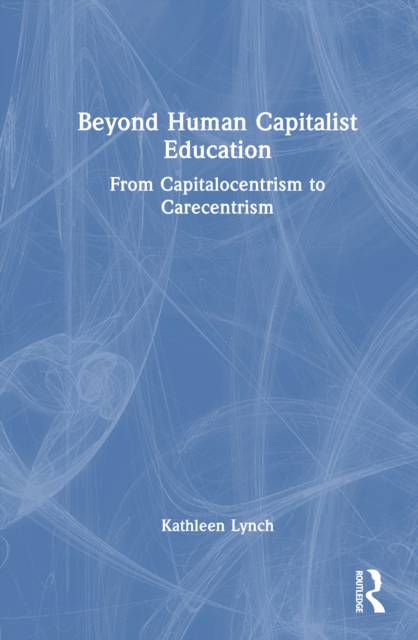
Beyond Human Capitalist Education
From Capitalocentrism to Carecentrism
Kathleen Lynch
Hardcover | Engels
€ 209,45
+ 418 punten
Uitvoering
Eenvoudig bestellen
Veilig betalen


Gratis thuislevering vanaf € 30 (via bpost)
Gratis levering in je Standaard Boekhandel
Omschrijving
With a preface by Michael Apple, this book challenges the dominant human-capital-centred model of education in the modern age which educates young people to adopt a consumption-led, individualistic approach to work, human relationships and everyday living. It argues for an alternative carecentric educational paradigm founded on principles of social and ecological justice.
Responding to the gap in critical educational analysis by examining how the principles of human capital theory are framing the substantive content and modes of assessment within education, chapters review the impact of economics, psychology, sociology and philosophy as powerful disciplines within education which, it is argued, have, in different ways, facilitated the hegemonic power of human capital-led thinking in educational policy making. The resultant implications for care and social justice are discussed, as well as an exploration of how a relational approach in educational practice and experiential learning could enable people to think and act carefully and critically about the Other including other species, the earth, and the self.
Calling for a radical remodelling of education in being critical of the educational status quo, this forward-thinking, ethically-informed book offers a hopeful perspective on education. It will be of interest to researchers, advanced undergraduate and postgraduate students and policy makers in the fields of educational policy and politics, sociology of education, and more broadly, teacher education. Those specifically interested in human capital theory will also find the book engaging in educational terms.
Specificaties
Betrokkenen
- Auteur(s):
- Uitgeverij:
Inhoud
- Aantal bladzijden:
- 322
- Taal:
- Engels
Eigenschappen
- Productcode (EAN):
- 9781032737355
- Verschijningsdatum:
- 5/08/2026
- Uitvoering:
- Hardcover
- Formaat:
- Genaaid
- Afmetingen:
- 156 mm x 233 mm


Alleen bij Standaard Boekhandel
+ 418 punten op je klantenkaart van Standaard Boekhandel
CADEAU

AANGERADEN


Beoordelingen
We publiceren alleen reviews die voldoen aan de voorwaarden voor reviews. Bekijk onze voorwaarden voor reviews.