


- Afhalen na 1 uur in een winkel met voorraad
- Gratis thuislevering in België vanaf € 30
- Ruim aanbod met 7 miljoen producten
- Afhalen na 1 uur in een winkel met voorraad
- Gratis thuislevering in België vanaf € 30
- Ruim aanbod met 7 miljoen producten





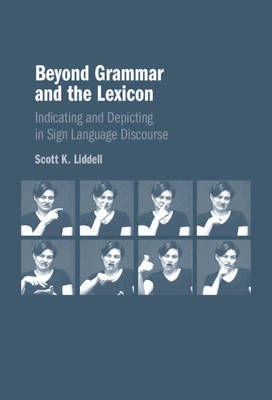
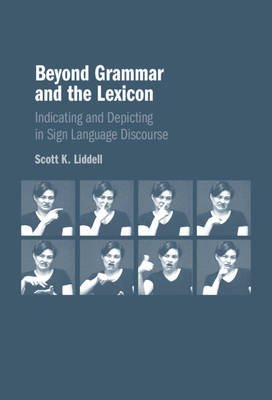
Beyond Grammar and the Lexicon
Indicating and Depicting in Sign Language Discourse
Scott K Liddell
Hardcover | Engels
€ 201,95
+ 403 punten
Omschrijving
Indicating and depicting are widely understood to be fundamental, meaningful components of everyday spoken language discourse: a speaker's arms and hands are free to indicate and depict because they do not articulate words. In contrast, a signer's arms and hands do articulate signs. For this reason, linguists studying sign languages have overwhelmingly concluded that signers do not indicate and depict as a part of signed articulations. This book demonstrates that signers do, however, indicate - by incorporating non-lexical gestures into their articulations of individual signs. Fully illustrated throughout, it also shows that signers create depictions in numerous ways through conceptualizations, in which the hands, other parts of the body, and parts of the space ahead of the signer depict things. By establishing that indicating and depicting are also fundamental, meaningful aspects of sign language discourse, this book is essential reading for researchers and students of sign linguistics and gesture studies.
Specificaties
Betrokkenen
- Auteur(s):
- Uitgeverij:
Inhoud
- Aantal bladzijden:
- 274
- Taal:
- Engels
Eigenschappen
- Productcode (EAN):
- 9781009646710
- Verschijningsdatum:
- 9/04/2026
- Uitvoering:
- Hardcover
- Formaat:
- Genaaid
- Afmetingen:
- 152 mm x 229 mm
- Gewicht:
- 535 g


Alleen bij Standaard Boekhandel
+ 403 punten op je klantenkaart van Standaard Boekhandel
Cadeau

AANGERADEN


Beoordelingen
We publiceren alleen reviews die voldoen aan de voorwaarden voor reviews. Bekijk onze voorwaarden voor reviews.