


- Afhalen na 1 uur in een winkel met voorraad
- Gratis thuislevering in België vanaf € 30
- Ruim aanbod met 7 miljoen producten
- Afhalen na 1 uur in een winkel met voorraad
- Gratis thuislevering in België vanaf € 30
- Ruim aanbod met 7 miljoen producten





Omschrijving
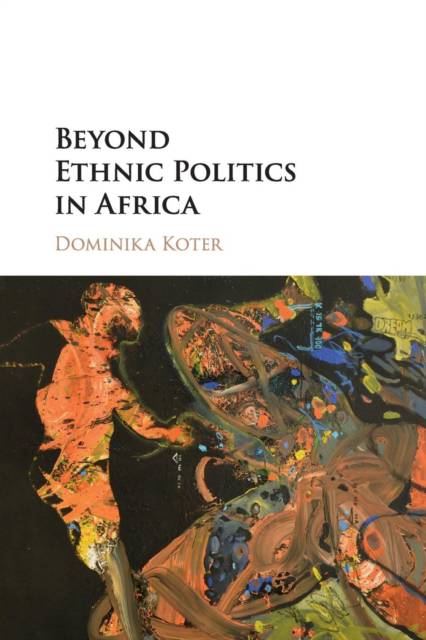
Why do ethnic politics emerge in some ethnically diverse societies but not others? Focusing on sub-Saharan Africa, Dominika Koter argues that the prevailing social structures of a country play a central role in how politicians attempt to mobilize voters. In particular, politicians consider the strength of local leaders, such as chiefs or religious dignitaries, who have historically played a crucial role in many parts of rural Africa. Local leaders can change the electoral dynamics by helping politicians secure votes among people of different ethnicities. Ethnic politics thus can be avoided where there are local leaders who can serve as credible electoral intermediaries between voters and politicians. Koter shows that there is widespread variation in the standing of local leaders across Africa, as a result of long-term historical trends, which has meant that politicians have mobilized voters in qualitatively different ways, resulting in different levels of ethnic politics across the continent.
Specificaties
Betrokkenen
- Auteur(s):
- Uitgeverij:
Inhoud
- Aantal bladzijden:
- 220
- Taal:
- Engels
Eigenschappen
- Productcode (EAN):
- 9781316622759
- Verschijningsdatum:
- 8/02/2018
- Uitvoering:
- Paperback
- Formaat:
- Trade paperback (VS)
- Afmetingen:
- 152 mm x 229 mm
- Gewicht:
- 326 g


Alleen bij Standaard Boekhandel
+ 135 punten op je klantenkaart van Standaard Boekhandel
Cadeau

AANGERADEN


Beoordelingen
We publiceren alleen reviews die voldoen aan de voorwaarden voor reviews. Bekijk onze voorwaarden voor reviews.