


- Afhalen na 1 uur in een winkel met voorraad
- Gratis thuislevering in België vanaf € 30
- Ruim aanbod met 7 miljoen producten
- Afhalen na 1 uur in een winkel met voorraad
- Gratis thuislevering in België vanaf € 30
- Ruim aanbod met 7 miljoen producten





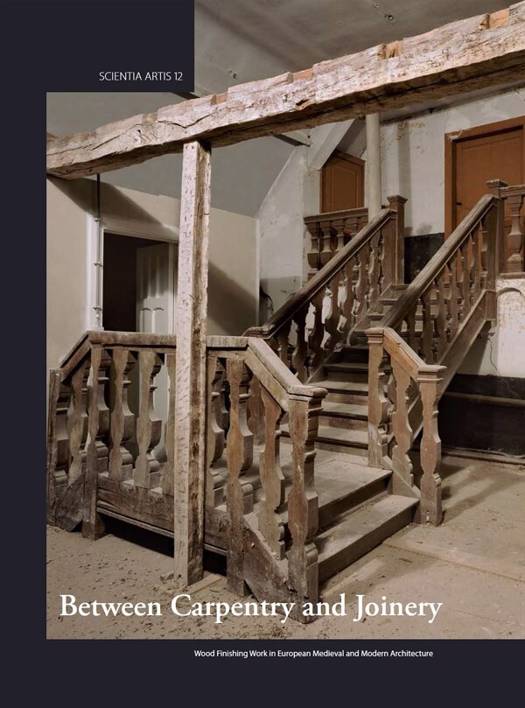
Between Carpentry and Joinery
Wood Finishing Work in Europe and Medieval and Modern Architecture
Pascale Fraiture
€ 45,00
+ 90 punten
Omschrijving
From the examination of the historiography of finishing work in wood for architecture from the medieval to modern period, it is clear that this field of research is the poor relation of historical and archaeological studies, with the lion's share focusing on the structural work of carpentry. It is on the basis of this observation that the present work has been produced, which results from a conference held in Brussels in 2013. The work demonstrates first the real interest in an approach to finishing work for the study of ancient buildings and the establishment of a precise chronology for their phases of layout as well as in obtaining better understanding of material cultures and ways of living. Second, it reiterates that the limit between carpentry and joinery was often porous, sometimes artificial. Finally, the work stresses that an overall approach to the use of wood is crucial to comprehensively address the organisation of a building, the logic of its construction and its 'utilisation', and more generally, the complex history of the buildings studied. This work, which thus represents a first step toward an overall approach of 'wood material' in European architecture, includes thirteen contributions divided into two thematic sections in keeping with current research practices. The first addresses the divide between structural and finishing work via the question of flooring, ceiling and roofing techniques. The second focuses intrinsically on finishing work by examining the contribution of this craft domain to the organisation, comfort and ornamentation of houses.
Specificaties
Betrokkenen
- Auteur(s):
- Uitgeverij:
Inhoud
- Aantal bladzijden:
- 271
- Taal:
- Engels
- Reeks:
- Reeksnummer:
- nr. 12
Eigenschappen
- Productcode (EAN):
- 9782930054285
- Verschijningsdatum:
- 24/02/2017
- Uitvoering:
- Paperback
- Formaat:
- Trade paperback (VS)
- Afmetingen:
- 218 mm x 297 mm
- Gewicht:
- 1247 g


Alleen bij Standaard Boekhandel
+ 90 punten op je klantenkaart van Standaard Boekhandel
Cadeau

AANGERADEN


Beoordelingen
We publiceren alleen reviews die voldoen aan de voorwaarden voor reviews. Bekijk onze voorwaarden voor reviews.