


- Afhalen na 1 uur in een winkel met voorraad
- Gratis thuislevering in België vanaf € 30
- Ruim aanbod met 7 miljoen producten
- Afhalen na 1 uur in een winkel met voorraad
- Gratis thuislevering in België vanaf € 30
- Ruim aanbod met 7 miljoen producten





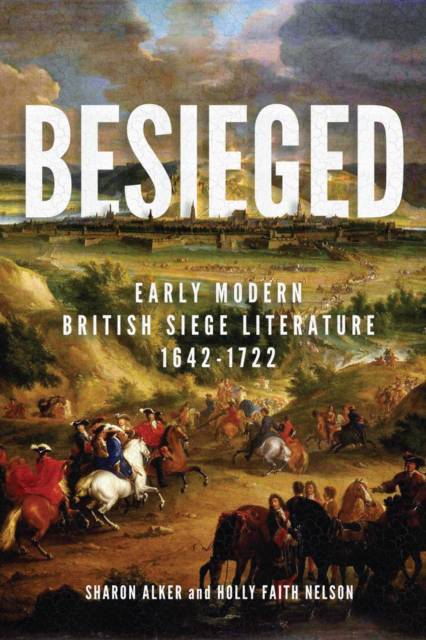
Besieged
Early Modern British Siege Literature, 1642-1722
Sharon Alker, Holly Nelson
Hardcover | Engels
€ 124,45
+ 248 punten
Eenvoudig bestellen
Veilig betalen


Gratis thuislevering vanaf € 30 (via bpost)
Gratis levering in je Standaard Boekhandel
Omschrijving
Siege literature has existed since antiquity but has not always been understood as a crucial element of culture. Focusing on its magnetic force, Besieged brings to light its popularity and potency between the British Civil War and the Great Northern War in Europe, a period in which literary texts reflected an urgent interest in siege mentality and tactics.
Exploring the siege as represented in canonical works by Milton, Dryden, Defoe, Davenant, Cowley, Cavendish, and Bunyan, alongside a wide array of little-known memoirs, plays, poems, and works of prose fiction on military and civilian experiences of siege warfare, Besieged breaks new ground in the field of early modern war literature. Sharon Alker and Holly Faith Nelson draw on theories of space and place to show how early modern Britons feverishly worked to make sense of the immediacy, horror, and trauma of urban warfare, offering a valuable perspective on the literature that captured the cultural imagination during and after the traumatic civil wars of the 1640s. Alker and Nelson demonstrate how the narratives of besieged cities became a compelling way to engage with the fragility of urban space, unstable social structures, developing technologies, and the inadequacy of old heroic martial models. Given the reality of urban warfare in our own age, Besieged provides a timely foundation for understanding the history of such spaces and their cultural representation.Specificaties
Betrokkenen
- Auteur(s):
- Uitgeverij:
Inhoud
- Aantal bladzijden:
- 336
- Taal:
- Engels
Eigenschappen
- Productcode (EAN):
- 9780228005407
- Verschijningsdatum:
- 15/01/2021
- Uitvoering:
- Hardcover
- Formaat:
- Genaaid
- Afmetingen:
- 152 mm x 231 mm
- Gewicht:
- 635 g



Alleen bij Standaard Boekhandel
+ 248 punten op je klantenkaart van Standaard Boekhandel
CADEAU

AANGERADEN


Beoordelingen
We publiceren alleen reviews die voldoen aan de voorwaarden voor reviews. Bekijk onze voorwaarden voor reviews.