


- Afhalen na 1 uur in een winkel met voorraad
- Gratis thuislevering in België vanaf € 30
- Ruim aanbod met 7 miljoen producten
- Afhalen na 1 uur in een winkel met voorraad
- Gratis thuislevering in België vanaf € 30
- Ruim aanbod met 7 miljoen producten





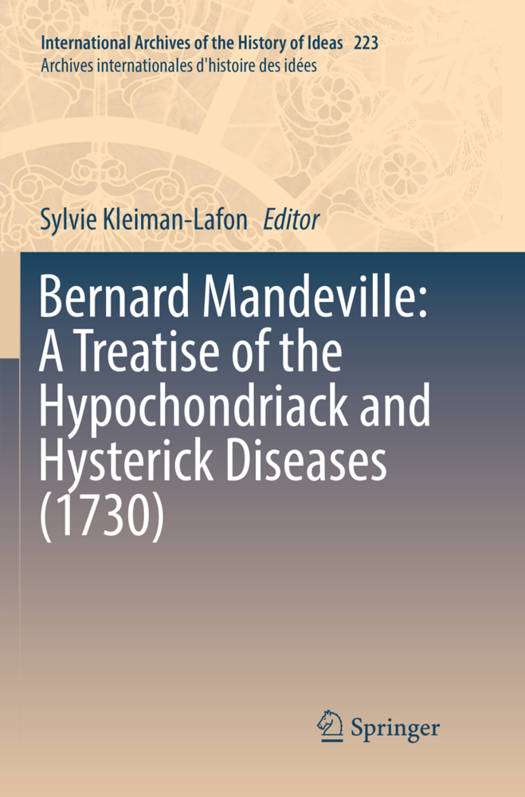
Bernard Mandeville: A Treatise of the Hypochondriack and Hysterick Diseases (1730)
Paperback | Engels | International Archives of the History of Ideas Archives internationales d'histoire des idées | nr. 223
€ 216,95
+ 433 punten
Omschrijving
Mandeville’s aim was to delineate his own cure for hypochondria and hysteria, which consisted of a talking cure followed by diet and exercise, but also to discuss the practice of medicine in England and continental Europe at a time when physicians were beginning to lose ground to apothecaries.
Specificaties
Betrokkenen
- Uitgeverij:
Inhoud
- Aantal bladzijden:
- 238
- Taal:
- Engels
- Reeks:
- Reeksnummer:
- nr. 223
Eigenschappen
- Productcode (EAN):
- 9783319862477
- Verschijningsdatum:
- 10/08/2018
- Uitvoering:
- Paperback
- Afmetingen:
- 155 mm x 13 mm
- Gewicht:
- 385 g

Alleen bij Standaard Boekhandel
+ 433 punten op je klantenkaart van Standaard Boekhandel
Cadeau

AANGERADEN


Beoordelingen
We publiceren alleen reviews die voldoen aan de voorwaarden voor reviews. Bekijk onze voorwaarden voor reviews.