


Bedankt voor het vertrouwen het afgelopen jaar! Om jou te bedanken bieden we GRATIS verzending (in België) aan op alles gedurende de hele maand januari.
- Afhalen na 1 uur in een winkel met voorraad
- In januari gratis thuislevering in België
- Ruim aanbod met 7 miljoen producten
Bedankt voor het vertrouwen het afgelopen jaar! Om jou te bedanken bieden we GRATIS verzending (in België) aan op alles gedurende de hele maand januari.
- Afhalen na 1 uur in een winkel met voorraad
- In januari gratis thuislevering in België
- Ruim aanbod met 7 miljoen producten





Omschrijving
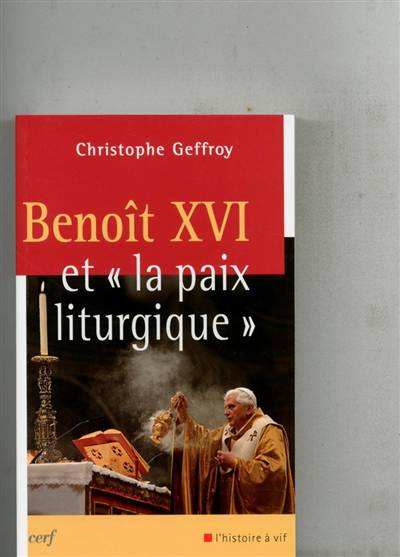
Le pape Benoît XVl a publié le 7 juillet 2007 le « Motu proprio Summorum Pontificum » qui libéralise l'usage du missel dit de saint Pie V. Pourquoi un tel texte, quel en est le but ? Fondamentalement, il s'inscrit dans la volonté du pape d'instaurer dans l'Église une véritable paix liturgique tout en contribuant à créer un mouvement de resacralisation de la liturgie. Pour mieux le comprendre, ce livre revient sur les écrits du cardinal Ratzinger et propose une analyse de ses positions sur la liturgie. Il explique aussi le contexte historique qui a été celui du concile Vatican II et de l'après-concile, période difficile durant laquelle le rite romain de la messe a été réformé de façon brutale, entraînant d'importants bouleversements dans la liturgie. Ces changements se sont produits dans un moment de crise où, dans l'Église comme dans la société, beaucoup ont cherché « à faire table rase du pass?. Cela n'a pas été sans influence sur la liturgie : face à de tels excès, le Magistère a progressivement pris la mesure des dégâts et a publié un certain nombre de textes importants qui sont analysés dans cet ouvrage. Enfin, cette crise a suscité des réactions, dont la plus connue a été celle de Mgr Lefebvre qui en est arrivé à rompre avec Rome en 1988. La genèse et les raisons de cette rupture sont également abordées dans cet ouvrage qui propose, en conclusion, un regard prospectif sur l'avenir de la liturgie latine.
--
On the 7th of July 2007, Pope Benedict XVI published the Moto Proprio Summorum Pontificum, exhorting a more generous use of the celebration of the Roman Rite according to the Missal promulgated by Saint Pius V. In what aim? Basically, this letter is instrumental in the Pope's design to establish liturgical harmony while contributing to create a movement of resacralisation of the liturgy. Recalling the writings of Cardinal Ratzinger, this book proposes an analysis of his positions on liturgy and explains the historical context of the Vatican II council and its difficult aftermath, a time of reform in the Church and radical changes in liturgy. But it was also a time of crisis in society as well as the Church, during which many attempted to ‘make a clean sweep'. The author assesses the extent and the reactions of that change, including that of Mgr Lefebvre who broke away from Rome in 1988, concluding with a prospective view of the future of Latin liturgy.
--
On the 7th of July 2007, Pope Benedict XVI published the Moto Proprio Summorum Pontificum, exhorting a more generous use of the celebration of the Roman Rite according to the Missal promulgated by Saint Pius V. In what aim? Basically, this letter is instrumental in the Pope's design to establish liturgical harmony while contributing to create a movement of resacralisation of the liturgy. Recalling the writings of Cardinal Ratzinger, this book proposes an analysis of his positions on liturgy and explains the historical context of the Vatican II council and its difficult aftermath, a time of reform in the Church and radical changes in liturgy. But it was also a time of crisis in society as well as the Church, during which many attempted to ‘make a clean sweep'. The author assesses the extent and the reactions of that change, including that of Mgr Lefebvre who broke away from Rome in 1988, concluding with a prospective view of the future of Latin liturgy.
Specificaties
Betrokkenen
- Auteur(s):
- Uitgeverij:
Inhoud
- Aantal bladzijden:
- 311
- Taal:
- Frans
Eigenschappen
- Productcode (EAN):
- 9782204086110
- Verschijningsdatum:
- 25/09/2008
- Uitvoering:
- Paperback
- Afmetingen:
- 140 mm x 220 mm
- Gewicht:
- 410 g



Alleen bij Standaard Boekhandel
+ 48 punten op je klantenkaart van Standaard Boekhandel
SOLDEN


Beoordelingen
We publiceren alleen reviews die voldoen aan de voorwaarden voor reviews. Bekijk onze voorwaarden voor reviews.