



Bedankt voor het vertrouwen het afgelopen jaar! Om jou te bedanken bieden we GRATIS verzending (in België) aan op alles gedurende de hele maand januari.
- Afhalen na 1 uur in een winkel met voorraad
- In januari gratis thuislevering in België
- Ruim aanbod met 7 miljoen producten
Bedankt voor het vertrouwen het afgelopen jaar! Om jou te bedanken bieden we GRATIS verzending (in België) aan op alles gedurende de hele maand januari.
- Afhalen na 1 uur in een winkel met voorraad
- In januari gratis thuislevering in België
- Ruim aanbod met 7 miljoen producten





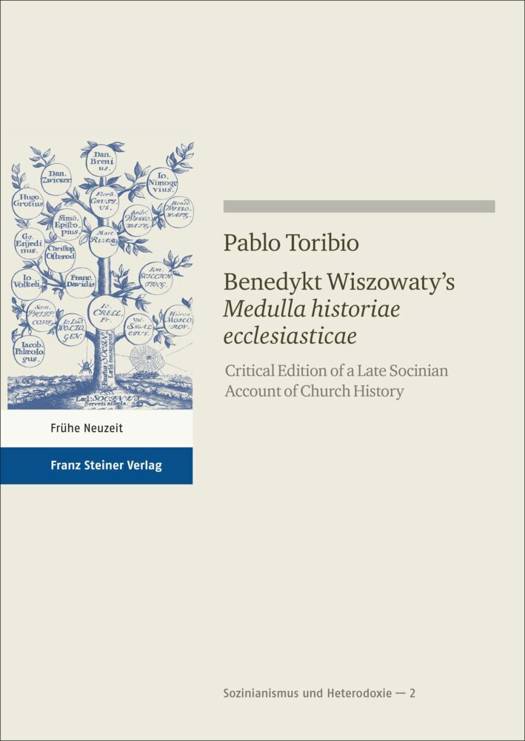
Benedykt Wiszowaty's 'Medulla Historiae Ecclesiasticae
Critical Edition of a Late Socinian Account of Church History
Pablo Toribio
€ 157,95
+ 315 punten
Omschrijving
An elusive figure of late Socinianism, Benedykt Wiszowaty (ca. 1660-after 1704) was the great grandson of Fausto Sozzini. He was educated in Amsterdam, where he was responsible for several publications that ensured the Western European reception of Socinianism after its proscription from Poland, including Christoph Sand's (1644-1680) Bibliotheca Anti-Trinitariorum (1684). With his Medulla historiae ecclesiasticae (ca. 1685), Wiszowaty accomplished "probably the last serious work to come from the Polish Socinians, one which winds up their contribution for good and is in a sense their parting shot" (Lech Szczucki). Rooted in sixteenth-century Protestant apologetic traditions and much indebted to contemporary schorlarship from different confessions, the Medulla aims to identify traces of Socinian Christology in every period of Christian history. Pablo Toribio publishes this Latin treatise for the first time, providing a critical edition based on all known manuscripts (held today in Budapest, Cluj-Napoca and Hamburg). The edition is introduced by a philological discussion of the text and an account of Wiszowaty's life and intellectual profile.
Specificaties
Betrokkenen
- Auteur(s):
- Uitgeverij:
Inhoud
- Aantal bladzijden:
- 293
- Taal:
- Engels
- Reeks:
- Reeksnummer:
- nr. 2
Eigenschappen
- Productcode (EAN):
- 9783515137225
- Verschijningsdatum:
- 25/06/2024
- Uitvoering:
- Hardcover
- Formaat:
- Genaaid
- Afmetingen:
- 170 mm x 239 mm
- Gewicht:
- 852 g


Alleen bij Standaard Boekhandel
+ 315 punten op je klantenkaart van Standaard Boekhandel
SOLDEN


Beoordelingen
We publiceren alleen reviews die voldoen aan de voorwaarden voor reviews. Bekijk onze voorwaarden voor reviews.