



- Afhalen na 1 uur in een winkel met voorraad
- In januari gratis thuislevering in België
- Ruim aanbod met 7 miljoen producten
- Afhalen na 1 uur in een winkel met voorraad
- In januari gratis thuislevering in België
- Ruim aanbod met 7 miljoen producten





€ 110,45
+ 220 punten
Omschrijving
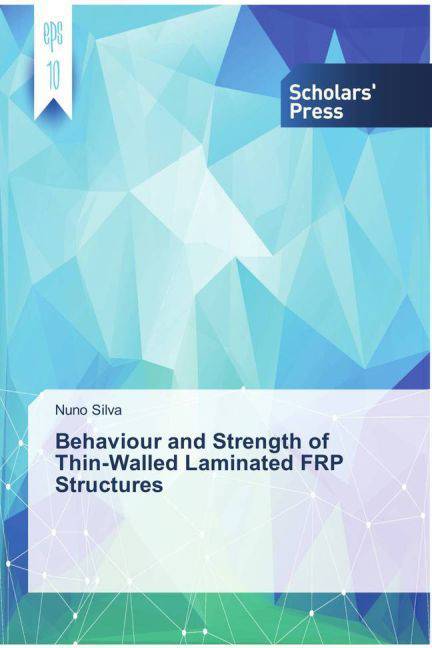
One presents several original Generalised Beam Theory (GBT) formulations suitable to describe the behaviour and strength of thin-walled prismatic structural elements (i) of arbitrary cross-sections constituted by elastic isotropic or orthotropic (composite) laminated FRP materials and (ii) subjected to general loading cases and support conditions. Arbitrary cross-sections are handled using a new GBT cross-section deformation description that (i) takes into account global, local, shear and transverse extension deformation and (ii) identifies a new set of deformation modes in cross-sections with closed cells, i.e., the cell shear flow modes, including the torsion mode. The effects of the (i) location of the load application point, with respect to the cross-section shear centre and (ii) transverse normal stresses due to concentrated transversal loads are included in the GBT buckling and post-buckling formulations. The problems of rigorously modelling (i) the composite walls constitutive laws and (ii) boundary conditions in GBT are also tackled. The upgraded versions of the theory are numerically implemented resorting to GBT-based finite elements.
Specificaties
Betrokkenen
- Auteur(s):
- Uitgeverij:
Inhoud
- Aantal bladzijden:
- 352
- Taal:
- Engels
Eigenschappen
- Productcode (EAN):
- 9783639703528
- Verschijningsdatum:
- 28/04/2015
- Uitvoering:
- Paperback
- Afmetingen:
- 150 mm x 220 mm
- Gewicht:
- 517 g


Alleen bij Standaard Boekhandel
+ 220 punten op je klantenkaart van Standaard Boekhandel
Cadeau

AANGERADEN


Beoordelingen
We publiceren alleen reviews die voldoen aan de voorwaarden voor reviews. Bekijk onze voorwaarden voor reviews.