



Bedankt voor het vertrouwen het afgelopen jaar! Om jou te bedanken bieden we GRATIS verzending (in België) aan op alles gedurende de hele maand januari.
- Afhalen na 1 uur in een winkel met voorraad
- In januari gratis thuislevering in België
- Ruim aanbod met 7 miljoen producten
Bedankt voor het vertrouwen het afgelopen jaar! Om jou te bedanken bieden we GRATIS verzending (in België) aan op alles gedurende de hele maand januari.
- Afhalen na 1 uur in een winkel met voorraad
- In januari gratis thuislevering in België
- Ruim aanbod met 7 miljoen producten





€ 203,45
+ 406 punten
Omschrijving
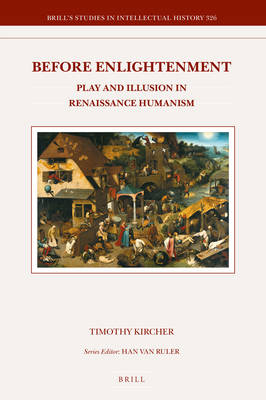
In Before Enlightenment: Play and Illusion in Renaissance Humanism, Timothy Kircher argues for new ways of appreciating Renaissance humanist philosophy. Literary qualities - tone, voice, persona, style, imagery - composed a core of their philosophizing, so that play and illusion, as well as rational certainty, formed pre-Enlightenment ideas about knowledge, ethics, and metaphysics.
Before Enlightenment takes issue with the long-standing view of humanism's philosophical mediocrity. It shows new features of Renaissance culture that help explain the origins not only of Enlightenment rationalists, but also of early modern novelists and essayists. If humanist writings promoted objective knowledge based on reason's supremacy over emotion, they also showed awareness of one's place and play in the world. The animal rationale is also the homo ludens.
Before Enlightenment takes issue with the long-standing view of humanism's philosophical mediocrity. It shows new features of Renaissance culture that help explain the origins not only of Enlightenment rationalists, but also of early modern novelists and essayists. If humanist writings promoted objective knowledge based on reason's supremacy over emotion, they also showed awareness of one's place and play in the world. The animal rationale is also the homo ludens.
Specificaties
Betrokkenen
- Auteur(s):
- Uitgeverij:
Inhoud
- Aantal bladzijden:
- 304
- Taal:
- Engels
- Reeks:
- Reeksnummer:
- nr. 326
Eigenschappen
- Productcode (EAN):
- 9789004442696
- Verschijningsdatum:
- 15/10/2020
- Uitvoering:
- Hardcover
- Formaat:
- Genaaid
- Afmetingen:
- 155 mm x 234 mm
- Gewicht:
- 598 g


Alleen bij Standaard Boekhandel
+ 406 punten op je klantenkaart van Standaard Boekhandel
SOLDEN


Beoordelingen
We publiceren alleen reviews die voldoen aan de voorwaarden voor reviews. Bekijk onze voorwaarden voor reviews.