


- Afhalen na 1 uur in een winkel met voorraad
- Gratis thuislevering in België vanaf € 30
- Ruim aanbod met 7 miljoen producten
- Afhalen na 1 uur in een winkel met voorraad
- Gratis thuislevering in België vanaf € 30
- Ruim aanbod met 7 miljoen producten





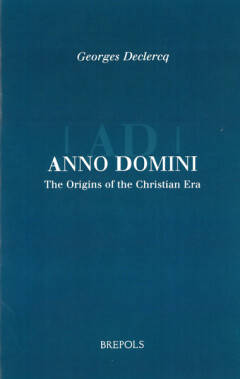
Beec 01 Anno Domini. the Origins of the Christian Era
G Declercq
€ 26,50
+ 53 punten
Omschrijving
The most successful dating system the world has ever known is that based on the 'Year of the Lord' (Anno Domini) - the Christian era. It was created in AD 525 by a Scythian monk, Dionysius Exiguus, primarily as a means of numbering Easters. Today, this system for reckoning time is used globally and is by no means restricted to adherents of Christianity. The present essay aims to describe not only the origins and the early development of the Dionysian system, from its invention until its adoption throughout Western Europe in the course of the eleventh century, but also its antecedents in Late Antiquity and the general context in which this era was conceived. The result is a broad chronological and geographical survey, encompassing developments over a period of a thousand years in both Latin Christendom and the Byzantine East. Georges Declercq takes the reader through the emergence of the Alexandrian and Byzantine ears of creation, the vexed question of the Easter or Paschal controversy, the computistical works of Victorius of Aquitaine and Dionysius Exiguus, and the role of the Anglo-Saxons in the manner in which Dionysius came to fix the incarnation of Christ in AD 1. This comprehensive survey is directed to both specialists and non-specialists and will be indispensable for any reader interested in early Christian chronology.
Specificaties
Betrokkenen
- Auteur(s):
- Uitgeverij:
Inhoud
- Aantal bladzijden:
- 207
- Taal:
- Engels
- Reeks:
- Reeksnummer:
- nr. 1
Eigenschappen
- Productcode (EAN):
- 9782503510507
- Verschijningsdatum:
- 6/07/2000
- Uitvoering:
- Paperback
- Formaat:
- Trade paperback (VS)
- Afmetingen:
- 170 mm x 231 mm
- Gewicht:
- 335 g


Alleen bij Standaard Boekhandel
+ 53 punten op je klantenkaart van Standaard Boekhandel
Cadeau

AANGERADEN


Beoordelingen
We publiceren alleen reviews die voldoen aan de voorwaarden voor reviews. Bekijk onze voorwaarden voor reviews.