



Bedankt voor het vertrouwen het afgelopen jaar! Om jou te bedanken bieden we GRATIS verzending (in België) aan op alles gedurende de hele maand januari.
- Afhalen na 1 uur in een winkel met voorraad
- In januari gratis thuislevering in België
- Ruim aanbod met 7 miljoen producten
Bedankt voor het vertrouwen het afgelopen jaar! Om jou te bedanken bieden we GRATIS verzending (in België) aan op alles gedurende de hele maand januari.
- Afhalen na 1 uur in een winkel met voorraad
- In januari gratis thuislevering in België
- Ruim aanbod met 7 miljoen producten





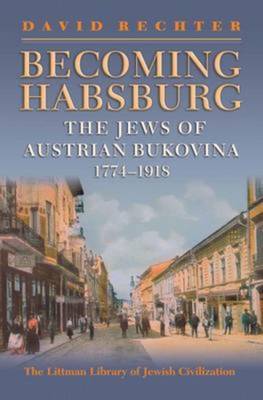
Omschrijving
Habsburg Bukovina no longer exists, save in the realms of historiography, nostalgia, and collective memory. Remembered for its remarkable multinational, multi-faith character, Bukovina and its capital city Czernowitz have long been presented as exemplars of inter-ethnic co-operation, political moderation, and cultural dynamism, with Jews regarded as indispensable to the region's character and vitality. This is not mere rhetoric: the Jews of Bukovina were integral to, and at home in, local society. David Rechter's important new history conveys the special nature of Bukovina Jewry while embedding it in the broader historical and intellectual frameworks of Galician, imperial Austrian, and east central European Jewries. Carefully tracing the evolution of the tangled relationship of state and society with the Jews, from the Josephinian Enlightenment through absolutism to emancipation, he brings to light the untold story of the Jewish minority in the monarchy's easternmost province, often a byword for economic backwardness and cultural provincialism. Here, at the edge of the Habsburg monarchy, Jews forged a new society from familiar elements, a unique hybrid of eastern and western European Jewries. Bukovina Jewry was both and neither: understanding its history can help us grasp the east/west fault lines within European Jewry, a key element in the Jewish experience in Europe.
Specificaties
Betrokkenen
- Auteur(s):
- Uitgeverij:
Inhoud
- Aantal bladzijden:
- 232
- Taal:
- Engels
- Reeks:
Eigenschappen
- Productcode (EAN):
- 9781904113959
- Verschijningsdatum:
- 20/06/2013
- Uitvoering:
- Hardcover
- Formaat:
- Genaaid
- Afmetingen:
- 160 mm x 236 mm
- Gewicht:
- 498 g


Alleen bij Standaard Boekhandel
+ 222 punten op je klantenkaart van Standaard Boekhandel
SOLDEN


Beoordelingen
We publiceren alleen reviews die voldoen aan de voorwaarden voor reviews. Bekijk onze voorwaarden voor reviews.