


- Afhalen na 1 uur in een winkel met voorraad
- Gratis thuislevering in België vanaf € 30
- Ruim aanbod met 7 miljoen producten
- Afhalen na 1 uur in een winkel met voorraad
- Gratis thuislevering in België vanaf € 30
- Ruim aanbod met 7 miljoen producten





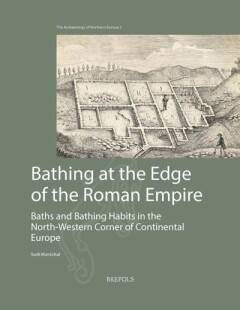
Bathing at the Edge of the Roman Empire
Baths and Bathing Habits in the North-Western Corner of Continental Europe
Sadi Marechal
€ 95,40
+ 190 punten
Omschrijving
Roman bathhouses are considered to be prime markers when studying romanization in the provinces of the Empire, as these very specific - and archaeologically recognizable - buildings, together with their associated ideas about the body and personal health, introduced a decidely Roman habit into regions that had hitherto been unfamiliar with (communal) bathhouses and heating technology. While traditionally, studies into Roman baths and bathing have focused on large public baths in the citiesof the empire, however, those from the area that now roughly corresponds to modern-day Belgium have often been neglected in recent research as this was an area with few important urban centres. This book for the first time investigates the introduction, spread, and eventual disappearance of Roman-style baths and of bathing habits in this north-western corner of the Roman Empire. A detailed analysis of the architecture, technology, and decoration of both public and private baths is combined with a discussion on the role of bathing in the area's romanization, and supplemented by a fully illustrated catalogue of all bathhouses in the area of study. In doing so, the volume sheds new light not only on the evolution of baths and bathing in this region, but also on their broader role in larger historic processes such as cultural change across the Empire.
Specificaties
Betrokkenen
- Auteur(s):
- Uitgeverij:
Inhoud
- Aantal bladzijden:
- 290
- Taal:
- Engels
- Reeks:
- Reeksnummer:
- nr. 2
Eigenschappen
- Productcode (EAN):
- 9782503600666
- Verschijningsdatum:
- 27/04/2023
- Uitvoering:
- Paperback
- Formaat:
- Trade paperback (VS)
- Gewicht:
- 784 g


Alleen bij Standaard Boekhandel
+ 190 punten op je klantenkaart van Standaard Boekhandel
Cadeau

AANGERADEN


Beoordelingen
We publiceren alleen reviews die voldoen aan de voorwaarden voor reviews. Bekijk onze voorwaarden voor reviews.