


- Afhalen na 1 uur in een winkel met voorraad
- Gratis thuislevering in België vanaf € 30
- Ruim aanbod met 7 miljoen producten
- Afhalen na 1 uur in een winkel met voorraad
- Gratis thuislevering in België vanaf € 30
- Ruim aanbod met 7 miljoen producten




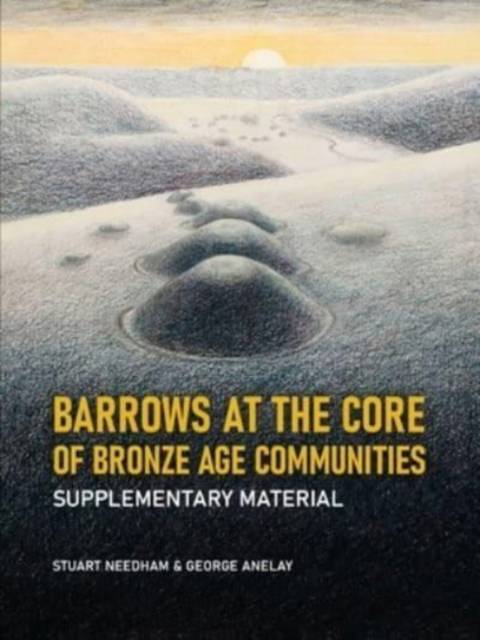
Barrows at the Core of Bronze Age Communities
Supplementary Material
Stuart Needham, George Anelay
Paperback | Engels
€ 40,00
+ 80 punten
Uitvoering
Omschrijving
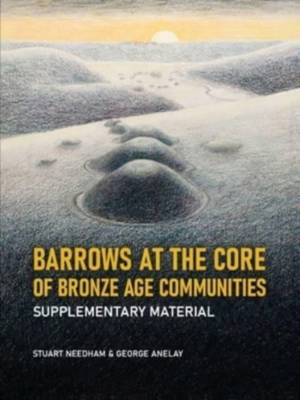
Barrows at the Core of Bronze Age Communities argues exactly that. Round barrows do not just represent the death side of Early Bronze Age communities placed in set-a-side ritual landscapes, but were instead central to existence in many ways. This study of the Rother Region, where the Weald meets the Wessex massif, reports the results of the People of the Heath project, 2014-18. It integrates a wealth of data from comprehensive field study of all relevant sites in the region with that from excavations into one of its major cemeteries - Petersfield Heath, Hampshire. Fourteen of 21 surviving barrows were sampled by excavation, one of the fullest records for such a cemetery in modern times. In addition to diverse burial rites, the site yielded a range of 'other significant deposits' and totally novel insights into the organic artifact repertoire thanks to mineral replacement.
Amongst the supplementary material in this volume are: a crucial new analysis of enclosure barrows in Wessex; further analyses regarding barrow morphologies, condition, cemetery formation, and siting; observations on damage and recommendations on the future management of the archaeology of Petersfield Heath; detailed context descriptions for the block-lifted urns and log-coffin burial subjected to pioneering stratigraphic micro-excavation; summaries of palaeoenvironmental evidence from the region; the full report on quartz optical dating; a major re-assessment of the excavated ring-ditch at Heath End, Duncton; further detail on finds; and details on various methodologies and definitions employed in the volume.
Together the two volumes contain much new for those researching the period, early burial practices and the prehistoric occupation of the western Weald. They will also galvanize debates about variations in the character of barrowscapes across Britain and the place of the Wessex barrow foci.
Amongst the supplementary material in this volume are: a crucial new analysis of enclosure barrows in Wessex; further analyses regarding barrow morphologies, condition, cemetery formation, and siting; observations on damage and recommendations on the future management of the archaeology of Petersfield Heath; detailed context descriptions for the block-lifted urns and log-coffin burial subjected to pioneering stratigraphic micro-excavation; summaries of palaeoenvironmental evidence from the region; the full report on quartz optical dating; a major re-assessment of the excavated ring-ditch at Heath End, Duncton; further detail on finds; and details on various methodologies and definitions employed in the volume.
Together the two volumes contain much new for those researching the period, early burial practices and the prehistoric occupation of the western Weald. They will also galvanize debates about variations in the character of barrowscapes across Britain and the place of the Wessex barrow foci.
Specificaties
Betrokkenen
- Auteur(s):
- Uitgeverij:
Inhoud
- Aantal bladzijden:
- 258
- Taal:
- Engels
Eigenschappen
- Productcode (EAN):
- 9789464260465
- Verschijningsdatum:
- 7/02/2022
- Uitvoering:
- Paperback
- Formaat:
- Trade paperback (VS)
- Afmetingen:
- 210 mm x 279 mm
- Gewicht:
- 913 g


Alleen bij Standaard Boekhandel
+ 80 punten op je klantenkaart van Standaard Boekhandel
AANGERADEN


Beoordelingen
We publiceren alleen reviews die voldoen aan de voorwaarden voor reviews. Bekijk onze voorwaarden voor reviews.