


- Afhalen na 1 uur in een winkel met voorraad
- Gratis thuislevering in België vanaf € 30
- Ruim aanbod met 7 miljoen producten
- Afhalen na 1 uur in een winkel met voorraad
- Gratis thuislevering in België vanaf € 30
- Ruim aanbod met 7 miljoen producten





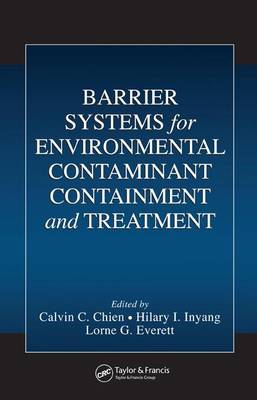
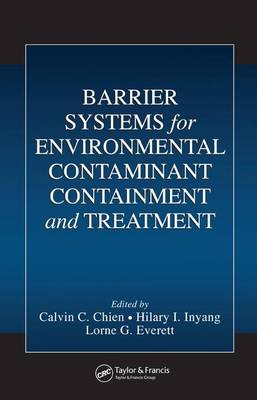
Barrier Systems for Environmental Contaminant Containment and Treatment
Calvin C Chien, Hilary I Inyang, Lorne G Everett
Hardcover | Engels
€ 331,45
+ 662 punten
Omschrijving
Containment and permeable reactive barriers have come full circle as an acceptable environmental control technology during the past 30 years. As interest shifted back toward containment in the 1990s, the industry found itself relying largely on pre-1980s technology. Fortunately, in the past 10 years important advances have occurred in several areas of containment, most notably in the area of permeable barriers. A balanced presentation of what is known and not known, Barrier Systems for Contaminant Containment and Environmental Treatment provides a comprehensive report on the current state of the science and technology of waste containment. Comprehensive and easily read, this book is rich with discussions and references to literature. Setting the stage for how contaminants can get into the subsurface, the authors describe pathways and introduce the essential concepts of risk. They provide details on the current state of the art for performance prediction and clearly delineate the limitations in modeling specific situations. The book addresses the materials used in barriers, defines their properties, and explores how they perform in the field. It describes available technologies and addresses their applications to various types of barriers. Tackling perhaps the most challenging aspect of waste containment technology, the book includes two case studies that demonstrate the value of validating field performance. Subsurface containment and treatment barriers will continue to be a widely used environmental control technology in the years ahead. Representing the collective knowledge and efforts of leading experts from research, industry, and regulatory agencies, this book provides a valuable reference that helps to chart the way to successfully managing many contaminated sites.
Specificaties
Betrokkenen
- Auteur(s):
- Uitgeverij:
Inhoud
- Aantal bladzijden:
- 408
- Taal:
- Engels
Eigenschappen
- Productcode (EAN):
- 9780849340406
- Verschijningsdatum:
- 1/10/2005
- Uitvoering:
- Hardcover
- Formaat:
- Genaaid
- Afmetingen:
- 155 mm x 237 mm
- Gewicht:
- 721 g


Alleen bij Standaard Boekhandel
+ 662 punten op je klantenkaart van Standaard Boekhandel
Cadeau

AANGERADEN


Beoordelingen
We publiceren alleen reviews die voldoen aan de voorwaarden voor reviews. Bekijk onze voorwaarden voor reviews.