


- Afhalen na 1 uur in een winkel met voorraad
- Gratis thuislevering in België vanaf € 30
- Ruim aanbod met 7 miljoen producten
- Afhalen na 1 uur in een winkel met voorraad
- Gratis thuislevering in België vanaf € 30
- Ruim aanbod met 7 miljoen producten





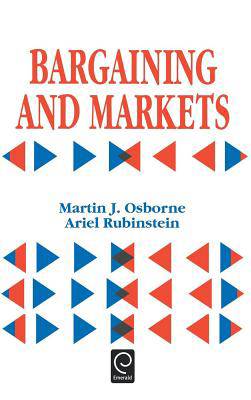
Bargaining and Markets
Martin J Osborne
€ 98,95
+ 197 punten
Omschrijving
The formal theory of bargaining originated with John Nash's work in the early 1950s. This book discusses two recent developments in this theory. The first uses the tool of extensive games to construct theories of bargaining in which time is modeled explicitly. The second applies the theory of bargaining to the study of decentralized markets. Rather than surveying the field, the authors present a select number of models, each of which illustrates a key point. In addition, they give detailed proofs throughout the book. It uses a small number of models, rather than a survey of the field, to illustrate key points, and includes detailed proofs given as explanations for the models. The text has been class-tested in a semester-long graduate course.
Specificaties
Betrokkenen
- Auteur(s):
- Uitgeverij:
Inhoud
- Aantal bladzijden:
- 236
- Taal:
- Engels
- Reeks:
Eigenschappen
- Productcode (EAN):
- 9780125286329
- Verschijningsdatum:
- 28/04/1990
- Uitvoering:
- Hardcover
- Formaat:
- Genaaid
- Afmetingen:
- 155 mm x 234 mm
- Gewicht:
- 489 g


Alleen bij Standaard Boekhandel
+ 197 punten op je klantenkaart van Standaard Boekhandel
Cadeau

AANGERADEN


Beoordelingen
We publiceren alleen reviews die voldoen aan de voorwaarden voor reviews. Bekijk onze voorwaarden voor reviews.