


- Afhalen na 1 uur in een winkel met voorraad
- Gratis thuislevering in België vanaf € 30
- Ruim aanbod met 7 miljoen producten
- Afhalen na 1 uur in een winkel met voorraad
- Gratis thuislevering in België vanaf € 30
- Ruim aanbod met 7 miljoen producten





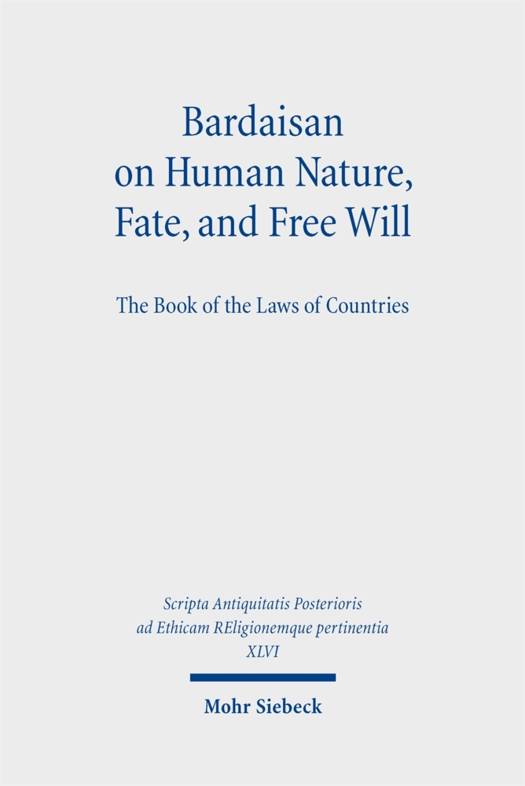
Bardaisan on Human Nature, Fate, and Free Will
The Book of the Laws of Countries
€ 135,95
+ 271 punten
Omschrijving
This in-depth investigation of Bardaisan of Edessa and the Syriac Book of the Laws of Countries, written by leading experts, explores Bardaisan's arguments on intellect, free will, nature, fate, anthropology, astrology, and eschatology. The introduction by Ilaria L.E. Ramelli examines his school and works, presents the Book as a Platonic dialogue reflecting his thought, and analyses its arguments against "Gnosticism" and Marcionism. Following the edition, translation, and commentary, six essays present new research. The first two focus on Bardaisan's support for apokatastasis, highlight parallels with Origen, and examine their shared Middle Platonic framework. The remaining essays explore the work's historical and cultural context as well as its philosophical and astrological background. The final essay assesses Bardaisan's impact on late antique Christianity. GERDieser Band versammelt Beitrage fuhrender Experten zu Bardesanes von Edessa, dem Buch der Gesetze der Lander und seiner Argumentation zu Anthropologie, freiem Willen, Natur, Schicksal, Astrologie und Eschatologie. Einleitend kontextualisiert Ilaria L.E. Ramelli das Buch in Werk und Schule des Gelehrten, argumentiert, dass das Buch als platonischer Dialog angelegt ist, beleuchtet seine anti-gnostischen und anti-markionitischen Argumente und erlautert textliche Probleme. Nach ihrer Edition, Ubersetzung und Kommentar prasentieren sechs Aufsatze neue Forschungseinsichten. Die ersten beiden konzentrieren sich auf Bardesanes Haltung zu Apokatastasis, Parallelen zu Origenes und ihren gemeinsamen "mittelplatonischen" Denkhorizont. Die folgenden Aufsatze untersuchen den historischen und kulturellen Kontext sowie die philosophischen und astrologischen Hintergrunde. Der letzte Aufsatz erortert Bardesanes'Einfluss auf das spatantike Christentum.
Specificaties
Betrokkenen
- Uitgeverij:
Inhoud
- Aantal bladzijden:
- 285
- Taal:
- Engels
- Reeks:
Eigenschappen
- Productcode (EAN):
- 9783161521218
- Verschijningsdatum:
- 30/07/2025
- Uitvoering:
- Hardcover
- Formaat:
- Genaaid
- Afmetingen:
- 145 mm x 226 mm
- Gewicht:
- 371 g

Alleen bij Standaard Boekhandel
+ 271 punten op je klantenkaart van Standaard Boekhandel
Cadeau

AANGERADEN


Beoordelingen
We publiceren alleen reviews die voldoen aan de voorwaarden voor reviews. Bekijk onze voorwaarden voor reviews.