


- Afhalen na 1 uur in een winkel met voorraad
- Gratis thuislevering in België vanaf € 30
- Ruim aanbod met 7 miljoen producten
- Afhalen na 1 uur in een winkel met voorraad
- Gratis thuislevering in België vanaf € 30
- Ruim aanbod met 7 miljoen producten





€ 94,95
+ 189 punten
Eenvoudig bestellen
Veilig betalen


Gratis thuislevering vanaf € 30 (via bpost)
Gratis levering in je Standaard Boekhandel
Omschrijving
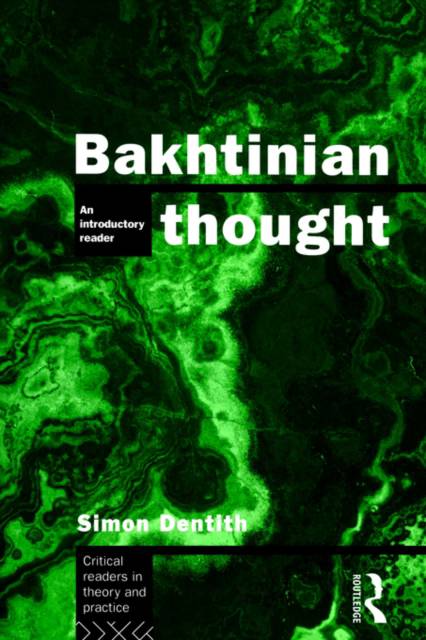
First published in 1994. Mikhail Bakhtin, and the writers associated with him, have come to be recognised as writers of trail-blazing importance. Working in the extraordinarily difficult conditions of Stalinist Russia, they nevertheless produced a body of writing in literary theory, linguistics, the history of the novel, philosophy, and what Bakhtin called 'philosophical anthropology', which continues to inspire and challenge people working in a number of different areas. Above all, Bakhtin insists on locating all utterances, whether spoken or literary, between the participants in a dialogue and thus involves them in considerations of power and authority. This introduction and reader serves a double function. In the first place, Simon Dentith provides a lucid and approachable introduction of the work of Bakhtin and his circle, taking the reader helpfully through the many areas of their thought, and indicating the points of controversy, difficulty and excitement. This introductory section culminates in a discussion of the particular emphases lent by Bakhtin to current debates in literary theory. The other feature of the book is the anthology of writing by Bakhtin, Voloshinov and Medvedev, drawn from all the major areas of their work. This provides an especially helpful reader for a body of work otherwise published in disparate and relatively inaccessible forms. Special emphasis has been given to the still unsurpassed linguistic thought of Voloshinov, and the practical analyses of the novel found in Bakhtin's writing on Dostoevsky and Dickens. This book will be especially interesting to readers new to the work of Bakhtin and his circle. The combination of an introduction and an anthology will allow such readers a context for their reading of Bakhtin, an indication of his importance for contemporary debates in literature, language and social history, and the opportunity to engage directly with the writings of this important and indeed, for the student of literary theory, essential writer.
Specificaties
Betrokkenen
- Auteur(s):
- Uitgeverij:
Inhoud
- Aantal bladzijden:
- 284
- Taal:
- Engels
- Reeks:
Eigenschappen
- Productcode (EAN):
- 9780415118996
- Verschijningsdatum:
- 15/12/1994
- Uitvoering:
- Paperback
- Formaat:
- Trade paperback (VS)
- Afmetingen:
- 153 mm x 237 mm
- Gewicht:
- 403 g


Alleen bij Standaard Boekhandel
+ 189 punten op je klantenkaart van Standaard Boekhandel
CADEAU

AANGERADEN


Beoordelingen
We publiceren alleen reviews die voldoen aan de voorwaarden voor reviews. Bekijk onze voorwaarden voor reviews.