



Bedankt voor het vertrouwen het afgelopen jaar! Om jou te bedanken bieden we GRATIS verzending (in België) aan op alles gedurende de hele maand januari.
- Afhalen na 1 uur in een winkel met voorraad
- In januari gratis thuislevering in België
- Ruim aanbod met 7 miljoen producten
Bedankt voor het vertrouwen het afgelopen jaar! Om jou te bedanken bieden we GRATIS verzending (in België) aan op alles gedurende de hele maand januari.
- Afhalen na 1 uur in een winkel met voorraad
- In januari gratis thuislevering in België
- Ruim aanbod met 7 miljoen producten





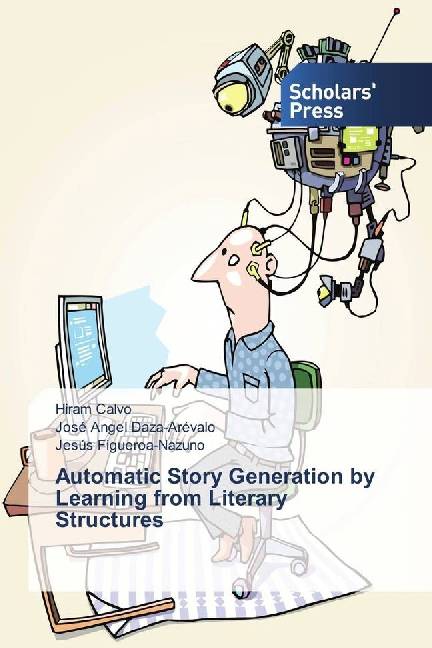
Automatic Story Generation by Learning from Literary Structures
Hiram Calvo, José Angel Daza-Arévalo, Jesús Figueroa-Nazuno
Paperback | Engels
€ 44,45
+ 88 punten
Omschrijving
Are mind and machine capable of solving the same tasks? Creativity is one of the arguments that some philosophers and psychologists use as a proof of what computers cannot achieve; however, these arguments might be based on a misconception of what both intelligence and creativity mean. This book provides arguments supporting that creativity, as storytelling, can be emulated through computer programs. The assumption of creativity presents a major problem: Complexity. Even if we consider creativity just as a product of novel ways of achieving a goal, the number of combinations found when dealing with the 'real world' is astronomically huge. We can recall The Library of Babel (Borges, 1944), a library that contains any possible book that could be written in the history of humanity. This metaphor reveals the combinatory problem that emerges if a brute force algorithm is designed to generate texts. According to our hypothesis, our proposal is a heuristic that uses simple syntactic and semantic properties found in a text corpus in order to generate novel and coherent fiction texts based on what has been already written.
Specificaties
Betrokkenen
- Auteur(s):
- Uitgeverij:
Inhoud
- Aantal bladzijden:
- 144
- Taal:
- Engels
Eigenschappen
- Productcode (EAN):
- 9783659842160
- Uitvoering:
- Paperback
- Afmetingen:
- 150 mm x 220 mm


Alleen bij Standaard Boekhandel
+ 88 punten op je klantenkaart van Standaard Boekhandel
SOLDEN


Beoordelingen
We publiceren alleen reviews die voldoen aan de voorwaarden voor reviews. Bekijk onze voorwaarden voor reviews.