


- Afhalen na 1 uur in een winkel met voorraad
- Gratis thuislevering in België vanaf € 30
- Ruim aanbod met 7 miljoen producten
- Afhalen na 1 uur in een winkel met voorraad
- Gratis thuislevering in België vanaf € 30
- Ruim aanbod met 7 miljoen producten





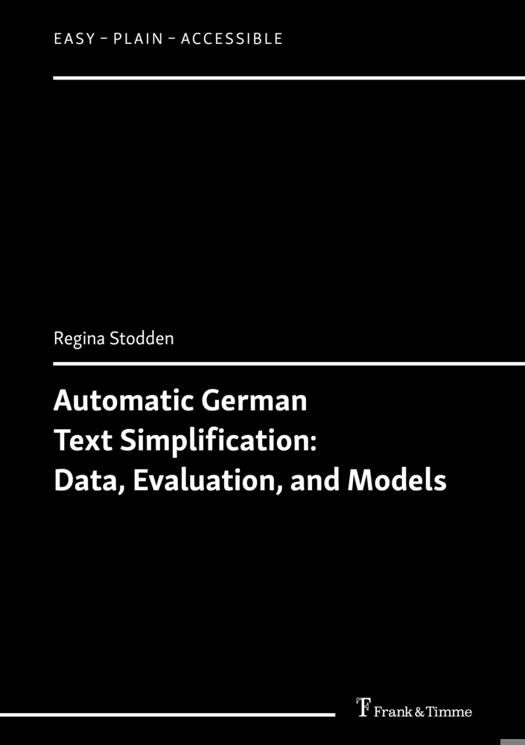
Automatic German Text Simplification: Data, Evaluation, and Models
Regina Stodden
€ 67,95
+ 135 punten
Eenvoudig bestellen
Veilig betalen


Gratis thuislevering vanaf € 30 (via bpost)
Gratis levering in je Standaard Boekhandel
Omschrijving
Texts written in simplified language are essential for accessible communication. However, manually writing accessible texts or simplifying difficult-to-read texts into accessible language is very time-consuming. Machine learning models such as large language models (LLMs) can assist with this intra-lingual translation task by providing drafts for professional translators.This volume takes a computational linguist's perspective on automatic text simplification (ATS), providing a broad introduction to the field. The book begins by introducing the challenges and opportunities. It also explains how to build simplification datasets, use them to train machine learning models, and evaluate them. The book also provides state-of-the-art overviews of German text simplification models, datasets and evaluation metrics for document and sentence simplification. While the focus is primarily on German plain language ("Einfache Sprache"), the book also provides some insights into German easy-to-read language ("Leichte Sprache") and other languages.
Specificaties
Betrokkenen
- Auteur(s):
- Uitgeverij:
Inhoud
- Taal:
- Engels
- Reeks:
- Reeksnummer:
- nr. 21
Eigenschappen
- Productcode (EAN):
- 9783732912162
- Uitvoering:
- Paperback
- Afmetingen:
- 170 mm x 17 mm
- Gewicht:
- 549 g


Alleen bij Standaard Boekhandel
+ 135 punten op je klantenkaart van Standaard Boekhandel
CADEAU

AANGERADEN


Beoordelingen
We publiceren alleen reviews die voldoen aan de voorwaarden voor reviews. Bekijk onze voorwaarden voor reviews.