


- Afhalen na 1 uur in een winkel met voorraad
- Gratis thuislevering in België vanaf € 30
- Ruim aanbod met 7 miljoen producten
- Afhalen na 1 uur in een winkel met voorraad
- Gratis thuislevering in België vanaf € 30
- Ruim aanbod met 7 miljoen producten





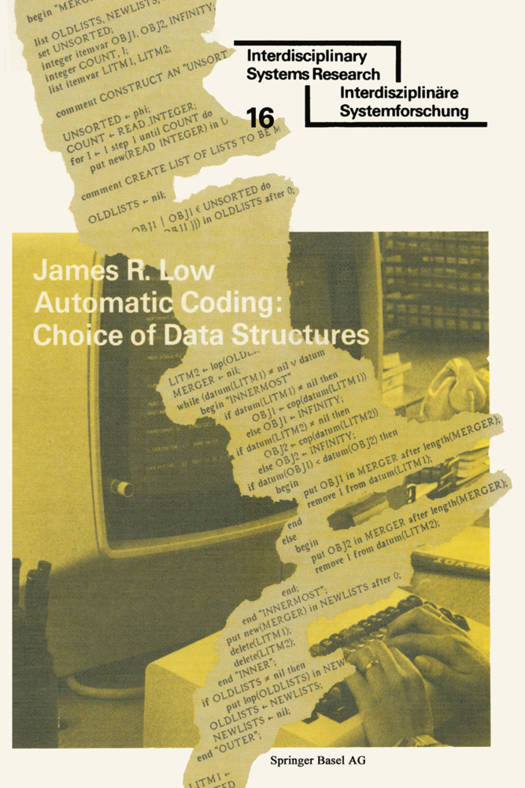
Automatic Coding: Choice of Data Structures
Low
€ 53,45
+ 106 punten
Omschrijving
1.0 2 information structures, and the runtime efficiency available using lower level data structures. We believe these runtime inefficiencies can be remedied by providing a library of representations for the information structures and a user assisted automatic system to choose appropriate elements from this library for the user's programs. The main problems in such an automatic approach are: 1). Building a library of representations; 2). Characterizing the properties of these representations; 3). understanding how the user's program actually uses the abstract information structures; and -4). efficiently matching the user program needs with the properties of the known representations. The research reported here is an attempt to demonstrate the feasibility of such automatic representation selection. We allow the user to express data in terms of relations, sets, and sequences. Our system then obtains information by analysis of the program, execution statement profiles and interrogation of the user. Using that information, the system selects efficient (in terms of time and space) low level implementations for the user's information structures from a fixed library of information structure representations. Though we have considered only a few abstract information structures (those available in our programming language, SAIL) we believe the techniques used in this system are generally applicable.
Specificaties
Betrokkenen
- Auteur(s):
- Uitgeverij:
Inhoud
- Aantal bladzijden:
- 110
- Taal:
- Engels
- Reeks:
Eigenschappen
- Productcode (EAN):
- 9783764308186
- Verschijningsdatum:
- 1/01/1976
- Uitvoering:
- Paperback
- Formaat:
- Trade paperback (VS)
- Afmetingen:
- 156 mm x 234 mm
- Gewicht:
- 185 g


Alleen bij Standaard Boekhandel
+ 106 punten op je klantenkaart van Standaard Boekhandel
CADEAU

AANGERADEN


Beoordelingen
We publiceren alleen reviews die voldoen aan de voorwaarden voor reviews. Bekijk onze voorwaarden voor reviews.