


- Afhalen na 1 uur in een winkel met voorraad
- Gratis thuislevering in België vanaf € 30
- Ruim aanbod met 7 miljoen producten
- Afhalen na 1 uur in een winkel met voorraad
- Gratis thuislevering in België vanaf € 30
- Ruim aanbod met 7 miljoen producten




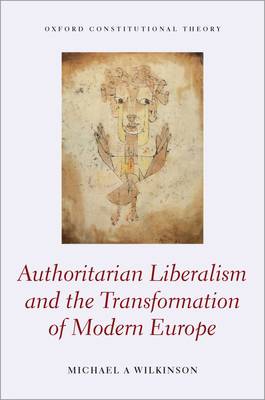
Authoritarian Liberalism and the Transformation of Modern Europe
Michael A Wilkinson
€ 160,45
+ 320 punten
Omschrijving
This title recounts the transformation of Europe from the post-war era until the Euro-crisis, using the tools of constitutional analysis and critical theory. The central claim is twofold: Europe has been gradually reconstituted in a manner that combines political authoritarianism with economic liberalism and that this order is now in a critical condition. Authoritarian liberalism is constructed supranationally, through a taming of inter-state relations in the project of European integration; at the domestic level, through the depoliticization of state-society relations; and socially, through the emergence of a new constitutional imaginary based on liberal individualism. In the language of constitutional theory, this transformation can be captured by the substitution of supranationalism for internationalism, technocracy for democracy, and economic for political freedom. Sovereignty is restrained, democracy curtailed, and class struggle repressed. This constitutional trajectory takes time to unfold and develop and it presents continuities and discontinuities. On the one hand, authoritarian liberalism is deepened by the neoliberalism of the Maastricht era and the creation of Economic and Monetary Union. On the other hand, counter-movements then also begin to emerge, geopolitically, in the return of the German question, domestically, in the challenges to the EU presented by constitutional courts, and informally, in the rise of anti-systemic political parties and movements. Sovereignty, democracy, and political freedom resurface, but are then more actively suppressed through the harsher authoritarian liberalism of the Euro-crisis phase. This leads now to an impasse. Anti-systemic politics return but remain uneasily within the EU, suggesting authoritarian liberalism has reached its limits if just about managing to maintain constitutional order. As yet, there has been no definitive rupture, with the possible exception of Brexit.
Specificaties
Betrokkenen
- Auteur(s):
- Uitgeverij:
Inhoud
- Aantal bladzijden:
- 352
- Taal:
- Engels
- Reeks:
Eigenschappen
- Productcode (EAN):
- 9780198854753
- Verschijningsdatum:
- 10/08/2021
- Uitvoering:
- Hardcover
- Formaat:
- Genaaid
- Afmetingen:
- 157 mm x 236 mm
- Gewicht:
- 657 g


Alleen bij Standaard Boekhandel
+ 320 punten op je klantenkaart van Standaard Boekhandel
AANGERADEN


Beoordelingen
We publiceren alleen reviews die voldoen aan de voorwaarden voor reviews. Bekijk onze voorwaarden voor reviews.