


- Afhalen na 1 uur in een winkel met voorraad
- Gratis thuislevering in België vanaf € 30
- Ruim aanbod met 7 miljoen producten
- Afhalen na 1 uur in een winkel met voorraad
- Gratis thuislevering in België vanaf € 30
- Ruim aanbod met 7 miljoen producten





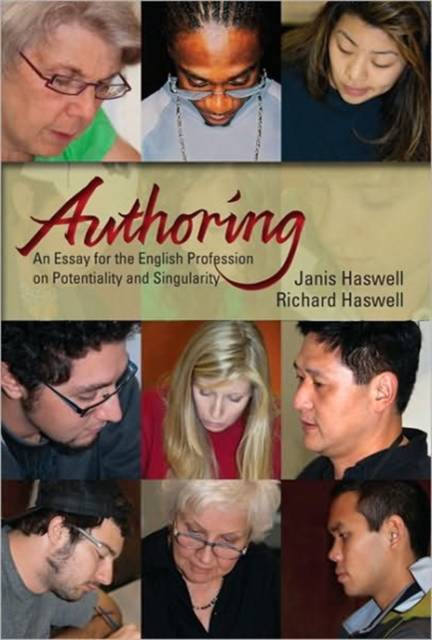
Authoring
An Essay for the English Profession on Potentiality and Singularity
Janis Haswell, Richard Haswell
Hardcover | Engels
€ 33,95
+ 67 punten
Uitvoering
Omschrijving
The postmodern conviction that meaning is indeterminate and self is an illusion, though fascinating and defensible in theory, leaves a number of scholarly and pedagogical questions unsatisfied. Authoring--the phenomenological act or felt sense of creating a text--is "a remarkably black box," say Haswell and Haswell, yet it should be one of the central preoccupations of scholars in English studies. Not only can the study of authoring accommodate the "social turn" since postmodernism, they argue, but it accommodates as well conceptions of, and the lived experience of, personal potentiality and singularity. Without abandoning the value of postmodern perspectives, Haswell and Haswell use their own perspective of authorial potentiality and singularity to reconsider staple English-studies concerns such as gender, evaluation, voice, character, literacy, feminism, self, interpretation, assessment, signature, and taste. The essay is unique as well in the way that its authors embrace often competing realms of English studies, drawing examples and arguments equally from literary and compositionist research. In the process, the Haswells have created a Big Idea book, and a critique of the field. Their point is clear: the singular person/mysterious black box/author merits deeper consideration than we have given it, and the book's crafted and woven explorations provide the intellectual tools to move beyond both political divisions and theoretical impasses.
Specificaties
Betrokkenen
- Auteur(s):
- Uitgeverij:
Inhoud
- Aantal bladzijden:
- 279
- Taal:
- Engels
Eigenschappen
- Productcode (EAN):
- 9780874217711
- Verschijningsdatum:
- 1/03/2010
- Uitvoering:
- Hardcover
- Formaat:
- Genaaid
- Afmetingen:
- 167 mm x 236 mm
- Gewicht:
- 625 g


Alleen bij Standaard Boekhandel
+ 67 punten op je klantenkaart van Standaard Boekhandel
Cadeau

AANGERADEN


Beoordelingen
We publiceren alleen reviews die voldoen aan de voorwaarden voor reviews. Bekijk onze voorwaarden voor reviews.