


- Afhalen na 1 uur in een winkel met voorraad
- Gratis thuislevering in België vanaf € 30
- Ruim aanbod met 7 miljoen producten
- Afhalen na 1 uur in een winkel met voorraad
- Gratis thuislevering in België vanaf € 30
- Ruim aanbod met 7 miljoen producten





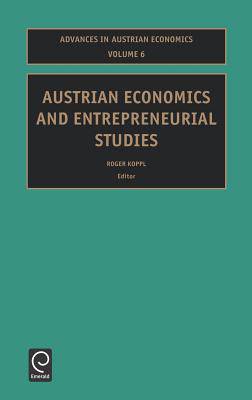
Austrian Economics and Entrepreneurial Studies
€ 270,95
+ 541 punten
Omschrijving
Austrian economics and entrepreneurial studies have both expanded greatly in the last twenty or thirty years. Unfortunately, they have developed more or less independently of each other. Austrian economics has enjoyed a revival since 1973 or 1974. In 1973, Israel Kirzner published his classic book, "Competition and Entrepreneurship", which outlined an entrepreneurial theory of the market process. In 1974, F. A. Hayek was awarded the Nobel Memorial Prize in Economics. The same year saw the famous South Royalton conference, which is the traditional origin of the "Austrian revival." The intellectual history of entrepreneurial studies reaches back at least as far as Richard Cantillon (1755).As an intellectual movement, however, entrepreneurial studies began about the same time as the Austrian revival. The beginnings of the entrepreneurship movement might be dated to sometime before 1978 when Babson College established its Center for Entrepreneurial Studies, the first such center in the US. In all this time, however, there has been limited exchange between Austrian economics and entrepreneurial studies. It is high time we expand trade across the border between Austrian economics and entrepreneurial studies.
Specificaties
Betrokkenen
- Uitgeverij:
Inhoud
- Aantal bladzijden:
- 316
- Taal:
- Engels
- Reeks:
- Reeksnummer:
- nr. 6
Eigenschappen
- Productcode (EAN):
- 9780762310418
- Verschijningsdatum:
- 19/08/2003
- Uitvoering:
- Hardcover
- Formaat:
- Genaaid
- Afmetingen:
- 161 mm x 231 mm
- Gewicht:
- 580 g

Alleen bij Standaard Boekhandel
+ 541 punten op je klantenkaart van Standaard Boekhandel
Cadeau

AANGERADEN


Beoordelingen
We publiceren alleen reviews die voldoen aan de voorwaarden voor reviews. Bekijk onze voorwaarden voor reviews.