


- Afhalen na 1 uur in een winkel met voorraad
- Gratis thuislevering in België vanaf € 30
- Ruim aanbod met 7 miljoen producten
- Afhalen na 1 uur in een winkel met voorraad
- Gratis thuislevering in België vanaf € 30
- Ruim aanbod met 7 miljoen producten





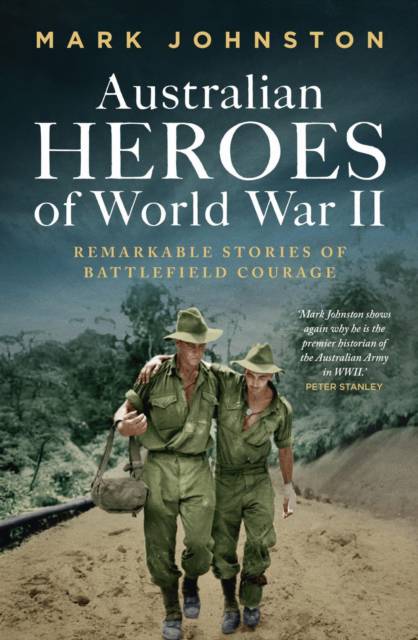
Australian Heroes of World War II
Remarkable Stories of Battlefield Courage
Mark Johnston
Paperback | Engels
€ 54,45
+ 108 punten
Omschrijving
When Australians defended against Rommel's tanks at Tobruk and Alamein, tackled paratroopers landing among them on Crete, attacked French Foreign Legionnaires in Syrian forts, held off Japanese tanks in Malaya, fought hand-to-hand on the Kokoda Track, and took on well-hidden and tenacious Japanese soldiers in countless grim jungle locations, brave individuals risked everything to bring victory. Australian soldiers performed acts of remarkable bravery in the roles of stretcher-bearers and snipers, in victories and defeats, and in desert and jungle. Men like the truck driver who took on 22 Japanese fighters with his fists and Owen gun and won. Such astonishing deeds were often rewarded with medals, but many brave deeds went unrecognised, and whether acknowledged or not, the heroes often paid a heavy price for their courageous acts, in the form of physical injury, psychological trauma or death. In Australian Heroes of World War II, leading Australian military historian Mark Johnston shines a new light on the the courage of individual soldiers across every battle in which Australians fought in World War II.
Specificaties
Betrokkenen
- Auteur(s):
- Uitgeverij:
Inhoud
- Aantal bladzijden:
- 480
- Taal:
- Engels
Eigenschappen
- Productcode (EAN):
- 9781761170362
- Verschijningsdatum:
- 1/10/2025
- Uitvoering:
- Paperback
- Formaat:
- Trade paperback (VS)
- Afmetingen:
- 153 mm x 235 mm
- Gewicht:
- 657 g



Alleen bij Standaard Boekhandel
+ 108 punten op je klantenkaart van Standaard Boekhandel
Cadeau

AANGERADEN


Beoordelingen
We publiceren alleen reviews die voldoen aan de voorwaarden voor reviews. Bekijk onze voorwaarden voor reviews.