


- Afhalen na 1 uur in een winkel met voorraad
- Gratis thuislevering in België vanaf € 30
- Ruim aanbod met 7 miljoen producten
- Afhalen na 1 uur in een winkel met voorraad
- Gratis thuislevering in België vanaf € 30
- Ruim aanbod met 7 miljoen producten





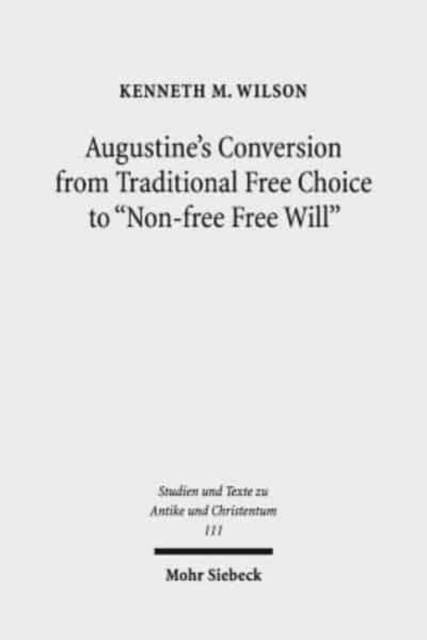
Augustine's Conversion from Traditional Free Choice to 'Non-Free Free Will'
A Comprehensive Methodology
Kenneth M Wilson
€ 97,95
+ 195 punten
Eenvoudig bestellen
Veilig betalen


Gratis thuislevering vanaf € 30 (via bpost)
Gratis levering in je Standaard Boekhandel
Omschrijving
The consensus view asserts Augustine developed his later doctrines ca. 396 CE while writing Ad Simplicianum as a result of studying scripture. His early De libero arbitrio argued for traditional free choice refuting Manichaean determinism, but his anti-Pelagian writings rejected any human ability to believe without God giving faith. Kenneth M. Wilson's study is the first work applying the comprehensive methodology of reading systematically and chronologically through Augustine's entire extant corpus (works, sermons, and letters 386-430 CE), and examining his doctrinal development. The author explores Augustine's later theology within the prior philosophical-religious context of free choice versus deterministic arguments. This analysis demonstrates Augustine persisted in traditional views until 412 CE and his theological transition was primarily due to his prior Stoic, Neoplatonic, and Manichaean influences.
Specificaties
Betrokkenen
- Auteur(s):
- Uitgeverij:
Inhoud
- Aantal bladzijden:
- 388
- Taal:
- Engels
- Reeks:
- Reeksnummer:
- nr. 111
Eigenschappen
- Productcode (EAN):
- 9783161557538
- Verschijningsdatum:
- 1/05/2018
- Uitvoering:
- Paperback
- Formaat:
- Trade paperback (VS)
- Afmetingen:
- 155 mm x 231 mm
- Gewicht:
- 612 g


Alleen bij Standaard Boekhandel
+ 195 punten op je klantenkaart van Standaard Boekhandel
CADEAU

AANGERADEN


Beoordelingen
We publiceren alleen reviews die voldoen aan de voorwaarden voor reviews. Bekijk onze voorwaarden voor reviews.