


- Afhalen na 1 uur in een winkel met voorraad
- Gratis thuislevering in België vanaf € 30
- Ruim aanbod met 7 miljoen producten
- Afhalen na 1 uur in een winkel met voorraad
- Gratis thuislevering in België vanaf € 30
- Ruim aanbod met 7 miljoen producten





Omschrijving
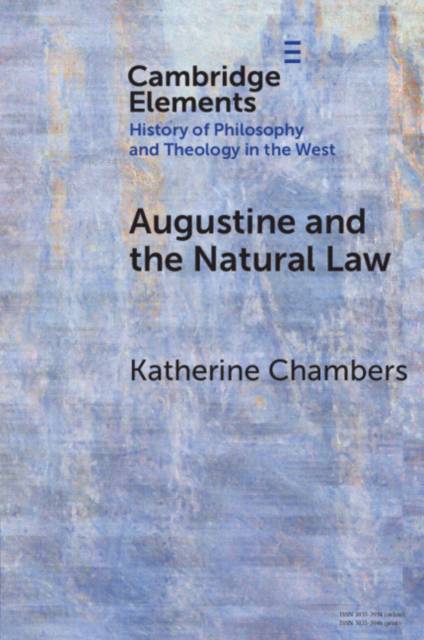
Augustine of Hippo (354-430 CE) is widely recognised as providing the foundational theological discussion of the natural law for Western Christianity. Yet his thinking on the natural law has not been examined in depth, despite the growing interest among contemporary theologians and philosophers in the natural law. For Christian thinkers, the idea of a natural moral law directly raises the question of the relationship between reason and revelation. In particular, the idea of the natural law needs to be reconciled with the idea of the divine law: that is, with the traditional Christian claim that knowing right from wrong is dependent in some way, or to some extent, on receiving God's self-revelation in Jesus Christ. This study revisits and revises our understanding of how Augustine reconciled reason and revelation in his discussion of the natural law.
Specificaties
Betrokkenen
- Auteur(s):
- Uitgeverij:
Inhoud
- Aantal bladzijden:
- 82
- Taal:
- Engels
- Reeks:
Eigenschappen
- Productcode (EAN):
- 9781009677738
- Verschijningsdatum:
- 26/02/2026
- Uitvoering:
- Paperback
- Formaat:
- Trade paperback (VS)
- Afmetingen:
- 152 mm x 229 mm
- Gewicht:
- 122 g


Alleen bij Standaard Boekhandel
+ 48 punten op je klantenkaart van Standaard Boekhandel
Cadeau

AANGERADEN


Beoordelingen
We publiceren alleen reviews die voldoen aan de voorwaarden voor reviews. Bekijk onze voorwaarden voor reviews.