



Bedankt voor het vertrouwen het afgelopen jaar! Om jou te bedanken bieden we GRATIS verzending (in België) aan op alles gedurende de hele maand januari.
- Afhalen na 1 uur in een winkel met voorraad
- In januari gratis thuislevering in België
- Ruim aanbod met 7 miljoen producten
Bedankt voor het vertrouwen het afgelopen jaar! Om jou te bedanken bieden we GRATIS verzending (in België) aan op alles gedurende de hele maand januari.
- Afhalen na 1 uur in een winkel met voorraad
- In januari gratis thuislevering in België
- Ruim aanbod met 7 miljoen producten





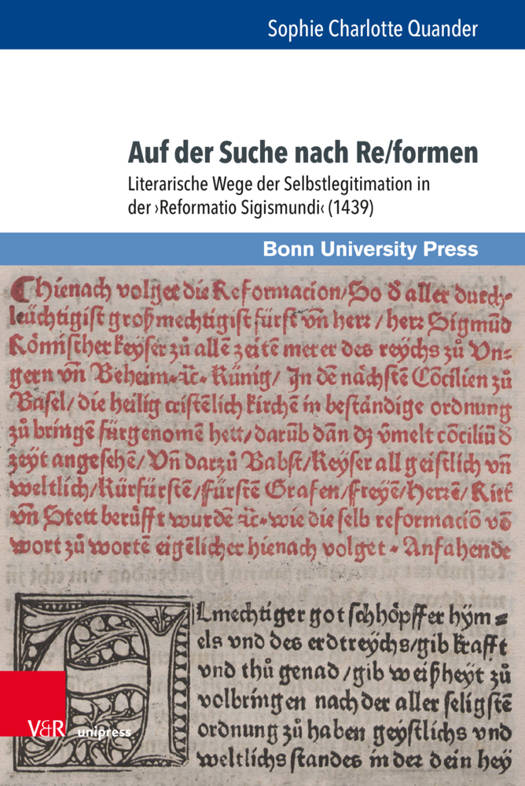
Auf Der Suche Nach Re/Formen
Literarische Wege Der Selbstlegitimation in Der Reformatio Sigismundi (1439)
Sophie Charlotte Quander
€ 58,45
+ 116 punten
Omschrijving
What does it take for a reform to succeed? The 'Reformatio Sigismundi' (1439) seems to pose this question regarding its own literary form: its anonymous author presents his ideas in German while enriching them with vernacular elements from sermons, prophecies and political publicity. Thus, in the midst of the Latin debate on a reform of church and empire at the Council of Basel, emerges the very first comprehensive reform text in German. So far, it remains unanswered why the anonymous author chooses the vernacular and how the change of language affects the argumentation and intention of the text. This study is the first to examine the 'Reformatio Sigismundi' from a literary perspective testing different philological methods in working with historical sources.
Specificaties
Betrokkenen
- Auteur(s):
- Uitgeverij:
Inhoud
- Aantal bladzijden:
- 336
- Taal:
- Duits
- Reeks:
- Reeksnummer:
- nr. 17
Eigenschappen
- Productcode (EAN):
- 9783847115991
- Verschijningsdatum:
- 4/09/2023
- Uitvoering:
- Hardcover
- Formaat:
- Genaaid
- Afmetingen:
- 155 mm x 231 mm
- Gewicht:
- 1356 g


Alleen bij Standaard Boekhandel
+ 116 punten op je klantenkaart van Standaard Boekhandel
SOLDEN


Beoordelingen
We publiceren alleen reviews die voldoen aan de voorwaarden voor reviews. Bekijk onze voorwaarden voor reviews.