


- Afhalen na 1 uur in een winkel met voorraad
- Gratis thuislevering in België vanaf € 30
- Ruim aanbod met 7 miljoen producten
- Afhalen na 1 uur in een winkel met voorraad
- Gratis thuislevering in België vanaf € 30
- Ruim aanbod met 7 miljoen producten





€ 16,50
+ 33 punten
Omschrijving
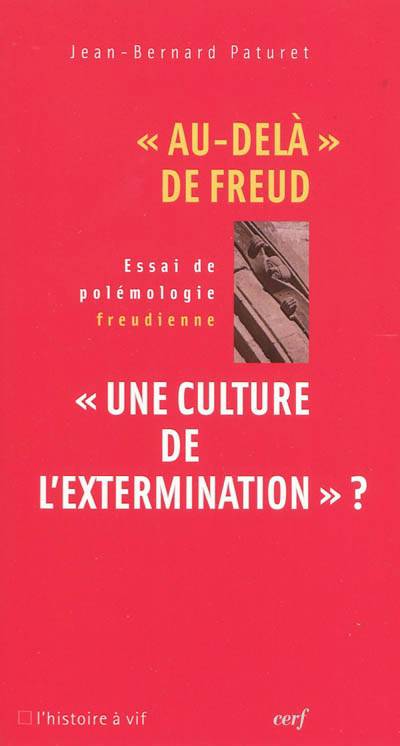
La célébration du 70e anniversaire de la mort de Freud (septembre 1939) est l'occasion d'une réflexion sur sa théorie de la guerre et de la mort. Fondée sur le mythe de la horde primitive, le meurtre du père et la dette commune, la société, selon Freud, s'organise autour des interdits de meurtre et d'inceste. La guerre fondée dans la pulsion de mort est la conséquence de la levée collective de ces interdits. Freud bâtit ainsi ce que l'on pourrait nommer une « culture du meurtre ». Mais dès la Première Guerre mondiale, il avait saisi qu'un bouleversement était en train de s'opérer avec la guerre totale, industrielle et informationnelle. Tout en restant fondamentalement et radicalement enraciné dans la pensée freudienne, ce travail tente de démontrer un « au-del? de Freud dans l'apparition d'une « culture de l'extermination » qui trouve son origine dans les grands textes fondateurs des monothéismes, puis son champ de réalisation dans l'histoire occidentale principalement. Cette « culture de l'extermination » n'a pas disparu avec les horreurs du siècle dernier. Elle est toujours bien présente partout dans le monde et prête à ressurgir en Occident comme le laissent entrevoir quelques frémissements politiques dans de nombreux pays. Il faut donc demeurer lucide et vigilant.
--
The commemoration on the 70th anniversary of Freud's death (September 1939) will be an occasion for reflection on his theory of war and death. Founded on the myths of the primal horde, the murder of the father and common debt, society - according to Freud - organized itself around the proscription of murder and incest. War founded on the death drive is the consequence of our collective abandon of these interdictions. In this way, Freud built what we could call a ‘culture of murder'. But with the advent of WW1, he realised that a dramatic change was taking place in this total, industrial and informational war. While remaining fundamentally and radically rooted in Freudian thought, this book strives to reveal a ‘beyond' Freud, the apparition of a ‘culture of extermination' whose origin lies in the great founding texts of monotheism, and whose field of application is principally Western history. This ‘culture of extermination' did not disappear with the horrors of the last century it is still clearly present all over the world and ready to resurface in the West, as political movements in many countries show. We must remain lucid, and vigilant.
--
The commemoration on the 70th anniversary of Freud's death (September 1939) will be an occasion for reflection on his theory of war and death. Founded on the myths of the primal horde, the murder of the father and common debt, society - according to Freud - organized itself around the proscription of murder and incest. War founded on the death drive is the consequence of our collective abandon of these interdictions. In this way, Freud built what we could call a ‘culture of murder'. But with the advent of WW1, he realised that a dramatic change was taking place in this total, industrial and informational war. While remaining fundamentally and radically rooted in Freudian thought, this book strives to reveal a ‘beyond' Freud, the apparition of a ‘culture of extermination' whose origin lies in the great founding texts of monotheism, and whose field of application is principally Western history. This ‘culture of extermination' did not disappear with the horrors of the last century it is still clearly present all over the world and ready to resurface in the West, as political movements in many countries show. We must remain lucid, and vigilant.
Specificaties
Betrokkenen
- Auteur(s):
- Uitgeverij:
Inhoud
- Aantal bladzijden:
- 134
- Taal:
- Frans
Eigenschappen
- Productcode (EAN):
- 9782204088732
- Verschijningsdatum:
- 10/09/2009
- Uitvoering:
- Paperback
- Afmetingen:
- 110 mm x 200 mm
- Gewicht:
- 129 g


Alleen bij Standaard Boekhandel
+ 33 punten op je klantenkaart van Standaard Boekhandel
Wedstrijd


Beoordelingen
We publiceren alleen reviews die voldoen aan de voorwaarden voor reviews. Bekijk onze voorwaarden voor reviews.