


- Afhalen na 1 uur in een winkel met voorraad
- Gratis thuislevering in België vanaf € 30
- Ruim aanbod met 7 miljoen producten
- Afhalen na 1 uur in een winkel met voorraad
- Gratis thuislevering in België vanaf € 30
- Ruim aanbod met 7 miljoen producten





€ 201,95
+ 403 punten
Omschrijving
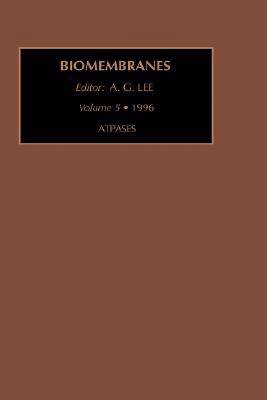
Volume 5 of Biomembranes covers an important group of membrane proteins, the ATPases. The P-type ATPases couple the hydrolysis of ATP to the movement of ions across a membrane and are characterized by the formation of a phosphoyrlated intermediate. Included are the plasma membrane and muscle sarcoplasmic reticulum Ca2+ -ATPases, the (Na+ -K+) -ATPase, the gastric (H+ -K+) -ATPase, the plasma membrane H+ -ATPase of fungi and plants, the Mg2+ - transport ATPase, the Salmonella typhimurium, and the K+ -ATPase of Escherichia coli, KdpB. The other important classes of ATPase in eukaryotic systems are the vacuolar H+ -ATPases and the F0F1 ATP synthase, and, in bacteria, the anion-translocating ATPases, responsible for resistance to arsenicals and antimonials, and the (Na+ -Mg2+) -ATPase of Acholeplasma. Finally, eukaryotic systems contain a variety of ectonucleotidases important, for example, in hydrolysis of extracellular ATP released as a cotransmitter from cholinergic and adrenergic nerve terminals. Volume 5 of Biomembranes explores structure-function relationships for these mebrane-bound ATPases.
Specificaties
Betrokkenen
- Uitgeverij:
Inhoud
- Aantal bladzijden:
- 428
- Taal:
- Engels
- Reeks:
- Reeksnummer:
- nr. 5
Eigenschappen
- Productcode (EAN):
- 9781559386623
- Verschijningsdatum:
- 17/12/1996
- Uitvoering:
- Hardcover
- Formaat:
- Genaaid
- Afmetingen:
- 156 mm x 234 mm
- Gewicht:
- 793 g

Alleen bij Standaard Boekhandel
+ 403 punten op je klantenkaart van Standaard Boekhandel
Cadeau

AANGERADEN


Beoordelingen
We publiceren alleen reviews die voldoen aan de voorwaarden voor reviews. Bekijk onze voorwaarden voor reviews.