


- Afhalen na 1 uur in een winkel met voorraad
- Gratis thuislevering in België vanaf € 30
- Ruim aanbod met 7 miljoen producten
- Afhalen na 1 uur in een winkel met voorraad
- Gratis thuislevering in België vanaf € 30
- Ruim aanbod met 7 miljoen producten





€ 83,45
+ 166 punten
Omschrijving
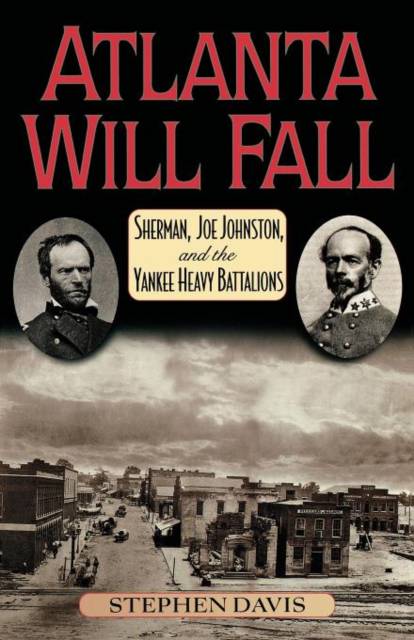
General John Bell Hood tried everything he could: Surprise attack. Flanking march. Cavalry raid into the enemy's rear lines. Simply enduring his opponent's semi-siege of the city. But nothing he tried worked. Because by the time he assumed command of Confederate forces protecting Atlanta, his predecessor Joe Johnston's chronic, characteristic strategy of gradual withdrawal had doomed the city to fall to William T. Sherman's Union troops. Joe Johnston lost Atlanta and John Bell Hood has gotten a bum rap, Stephen Davis argues in his new book, Atlanta Will Fall: Sherman, Joe Johnston, and the Yankee Heavy Battalions. The fall of the city was inevitable because Johnston pursued a strategy that was typical of his career: he fell back. Again and again. To the point where he allowed Sherman's army to within five miles of the city. Against a weaker opponent, Johnston's strategy might have succeeded. But Sherman commanded superior numbers, and he was a bold, imaginative strategist who pressed the enemy daily and used his artillery to pound their lines. Against this combination, Johnston didn't have a chance. And by the time Hood took over the Confederate command, neither did he. Atlanta Will Fall provides a lively, fast-paced overview of the entire Atlanta campaign from Dalton to Jonesboro. Davis describes the battles and analyzes the strategies. He evaluates the three generals, examining their plans of action, their tactics, and their leadership ability. In doing so, he challenges the commonly held perceptions of the two Confederate leaders and provides a new perspective on one of the most decisive battles of the Civil War. An excellent supplemental text for courses on the Civil War and American nineteenth-century history, Atlanta Will Fall will engage students with its brisk, concise examination of the fight for Atlanta.
Specificaties
Betrokkenen
- Auteur(s):
- Uitgeverij:
Inhoud
- Aantal bladzijden:
- 215
- Taal:
- Engels
- Reeks:
Eigenschappen
- Productcode (EAN):
- 9780842027885
- Verschijningsdatum:
- 1/04/2001
- Uitvoering:
- Paperback
- Formaat:
- Trade paperback (VS)
- Afmetingen:
- 140 mm x 216 mm
- Gewicht:
- 331 g



Alleen bij Standaard Boekhandel
+ 166 punten op je klantenkaart van Standaard Boekhandel
Cadeau

AANGERADEN


Beoordelingen
We publiceren alleen reviews die voldoen aan de voorwaarden voor reviews. Bekijk onze voorwaarden voor reviews.