


- Afhalen na 1 uur in een winkel met voorraad
- Gratis thuislevering in België vanaf € 30
- Ruim aanbod met 7 miljoen producten
- Afhalen na 1 uur in een winkel met voorraad
- Gratis thuislevering in België vanaf € 30
- Ruim aanbod met 7 miljoen producten





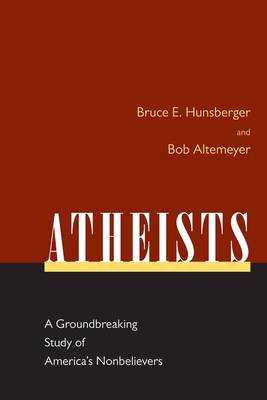
Atheists
A Groundbreaking Study of America's Nonbelievers
Bruce E Hunsberger, Bob Altemeyer
Paperback | Engels
€ 33,95
+ 67 punten
Omschrijving
According to polls, most Americans believe in God.But disbelief is spreading. After reviewing the mounting evidence that organized religion is declining in many countries, this accessible book provides the first scientific study of active atheists. The authors surveyed nearly 300 members of atheist organizations in the United States. Besides soliciting these nonbelievers' level of education, political leanings, etc., the researchers sought to understand how each respondent had become an atheist. Had they ever believed in God, or had they never? Had they paid a price for their atheism?Three chapters describe the levels of dogmatism, zealotry, and religious prejudice found among the active atheists. These results, compared with others obtained from more ordinary samples of atheists (and strong fundamentalists), often surprised the authors. Uniquely, the book features a chapter in which the atheists give their reaction to the study and its often-surprising findings. Another chapter breaks down the answers a large Canadian sample gave to the measures used in the American study, according to how religious the respondent was-from atheist to agnostic to four different levels of theistic intensity. A clear finding emerged: the more religious a group was, the more their personalities, prejudices, and beliefs separated them from everyone else.
Specificaties
Betrokkenen
- Auteur(s):
- Uitgeverij:
Inhoud
- Aantal bladzijden:
- 159
- Taal:
- Engels
Eigenschappen
- Productcode (EAN):
- 9781591024132
- Verschijningsdatum:
- 1/06/2006
- Uitvoering:
- Paperback
- Formaat:
- Trade paperback (VS)
- Afmetingen:
- 154 mm x 228 mm
- Gewicht:
- 222 g


Alleen bij Standaard Boekhandel
+ 67 punten op je klantenkaart van Standaard Boekhandel
CADEAU


Beoordelingen
We publiceren alleen reviews die voldoen aan de voorwaarden voor reviews. Bekijk onze voorwaarden voor reviews.