


- Afhalen na 1 uur in een winkel met voorraad
- Gratis thuislevering in België vanaf € 30
- Ruim aanbod met 7 miljoen producten
- Afhalen na 1 uur in een winkel met voorraad
- Gratis thuislevering in België vanaf € 30
- Ruim aanbod met 7 miljoen producten





€ 43,45
+ 86 punten
Omschrijving
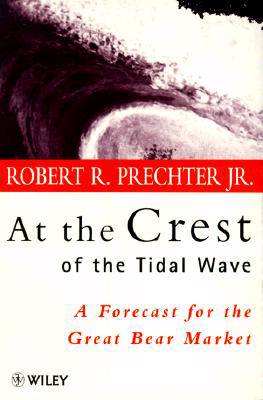
Just like Elliot Wave Principle, its super-bullish predecessor from 1978, this updated and abridged paperback version of At the Crest of the Tidal Wave presents a scenario that appears too dramatic and specific to be more than unfounded conjecture. However, the author's forecasting toll is again the only one that has proved its value in addressing future market probabilities. The result is social science at its best.
If even half of the author's forecasts come to pass, the world of finance just a few years hence will be immeasurably different from what it is today. Using the same precise approach that he employed a month after the 1982 low at Dow 777 to forecast a great bull market that would carry the Dow Industrial Average to near 4000, Robert Prechter now calls for slow motion economic earthquake that will register 11 on the financial Richter scale. The Great Assert Mania of recent years is in its final euphoric months, he says, and the next event will be a collapse of historic proportion.
If you are already well versed in the Wave Principle and prepared for the change that is coming, then ignore this book. If you are not, then devour it cover from cover. Be prepared for a shift in the tectonic plates that make up your mind's notions about financial causality. Above all, get ready for a violent shaking of your faith in conventional economic wisdom.
If even half of the author's forecasts come to pass, the world of finance just a few years hence will be immeasurably different from what it is today. Using the same precise approach that he employed a month after the 1982 low at Dow 777 to forecast a great bull market that would carry the Dow Industrial Average to near 4000, Robert Prechter now calls for slow motion economic earthquake that will register 11 on the financial Richter scale. The Great Assert Mania of recent years is in its final euphoric months, he says, and the next event will be a collapse of historic proportion.
If you are already well versed in the Wave Principle and prepared for the change that is coming, then ignore this book. If you are not, then devour it cover from cover. Be prepared for a shift in the tectonic plates that make up your mind's notions about financial causality. Above all, get ready for a violent shaking of your faith in conventional economic wisdom.
Specificaties
Betrokkenen
- Auteur(s):
- Uitgeverij:
Inhoud
- Aantal bladzijden:
- 366
- Taal:
- Engels
- Reeks:
Eigenschappen
- Productcode (EAN):
- 9780471979548
- Verschijningsdatum:
- 18/12/1997
- Uitvoering:
- Paperback
- Formaat:
- Trade paperback (VS)
- Afmetingen:
- 154 mm x 229 mm
- Gewicht:
- 539 g


Alleen bij Standaard Boekhandel
+ 86 punten op je klantenkaart van Standaard Boekhandel
AANGERADEN


Beoordelingen
We publiceren alleen reviews die voldoen aan de voorwaarden voor reviews. Bekijk onze voorwaarden voor reviews.