


- Afhalen na 1 uur in een winkel met voorraad
- Gratis thuislevering in België vanaf € 30
- Ruim aanbod met 7 miljoen producten
- Afhalen na 1 uur in een winkel met voorraad
- Gratis thuislevering in België vanaf € 30
- Ruim aanbod met 7 miljoen producten





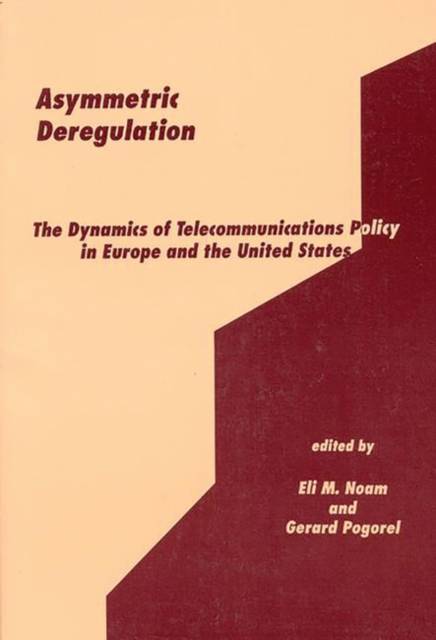
Asymmetric Deregulation
The Dynamics of Telecommunications Policy in Europe and the United States
Eli Noam, Gerard Pogorel
Hardcover | Engels
€ 161,45
+ 322 punten
Omschrijving
For almost a century, a relatively smooth cooperation characterized transatlantic communication; problems mostly involved technical compatibility and were resolved by technologists of the monopolistic telephone organizations on either side of the Atlantic. In recent years, however, the nature of international communications, its institutions, and its collaborative arrangements have radically changed. There now exists a great variety in the patterns of ownership and usage of telecommunications across different countries. This has led to a disequilibrium in the world telecommunications market that raises complex questions: Can evolving domestic deregulation be reconciled with an international regulatory regime? How does international trade regulation affect multinational governmental cooperation and private collaboration? Is competition viable in all sectors of the international telecommunications industry?
Specificaties
Betrokkenen
- Auteur(s):
- Uitgeverij:
Inhoud
- Aantal bladzijden:
- 268
- Taal:
- Engels
Eigenschappen
- Productcode (EAN):
- 9780893916961
- Verschijningsdatum:
- 1/01/1994
- Uitvoering:
- Hardcover
- Formaat:
- Genaaid
- Afmetingen:
- 152 mm x 229 mm
- Gewicht:
- 535 g


Alleen bij Standaard Boekhandel
+ 322 punten op je klantenkaart van Standaard Boekhandel
CADEAU


Beoordelingen
We publiceren alleen reviews die voldoen aan de voorwaarden voor reviews. Bekijk onze voorwaarden voor reviews.