


- Afhalen na 1 uur in een winkel met voorraad
- Gratis thuislevering in België vanaf € 30
- Ruim aanbod met 7 miljoen producten
- Afhalen na 1 uur in een winkel met voorraad
- Gratis thuislevering in België vanaf € 30
- Ruim aanbod met 7 miljoen producten





€ 116,95
+ 233 punten
Omschrijving
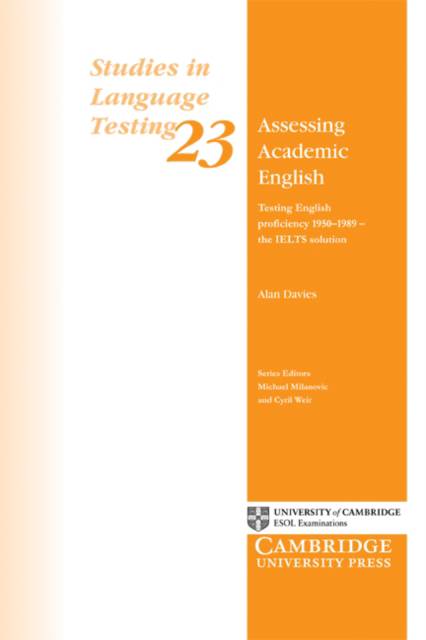
The volume offers an explanatory account of the progress of academic language proficiency testing in the UK (and later Australia), from the British Council's English Proficiency Test Battery (EPTB), through the revolutionary English Language Testing Service (ELTS) to the present solution of IELTS. The three stages of academic language testing in the UK over the last 50 years move from grammar through real life to features of language use. At the same time, comparison of predictive validities suggests that all three measures account for very similar shares of the variance (about 10%) and that therefore the choice of an academic language proficiency test is determined only in part by predictive validity: other factors such as test delivery, test renewal in response to fashion, research and impact on stakeholders, and assessment of all four language skills are also important.
Specificaties
Betrokkenen
- Auteur(s):
- Uitgeverij:
Inhoud
- Aantal bladzijden:
- 472
- Taal:
- Engels
- Reeks:
- Reeksnummer:
- nr. 23
Eigenschappen
- Productcode (EAN):
- 9780521542500
- Verschijningsdatum:
- 21/02/2008
- Uitvoering:
- Paperback
- Formaat:
- Trade paperback (VS)
- Afmetingen:
- 152 mm x 226 mm
- Gewicht:
- 748 g


Alleen bij Standaard Boekhandel
+ 233 punten op je klantenkaart van Standaard Boekhandel
Cadeau

AANGERADEN


Beoordelingen
We publiceren alleen reviews die voldoen aan de voorwaarden voor reviews. Bekijk onze voorwaarden voor reviews.