


- Afhalen na 1 uur in een winkel met voorraad
- Gratis thuislevering in België vanaf € 30
- Ruim aanbod met 7 miljoen producten
- Afhalen na 1 uur in een winkel met voorraad
- Gratis thuislevering in België vanaf € 30
- Ruim aanbod met 7 miljoen producten





€ 54,95
+ 109 punten
Omschrijving
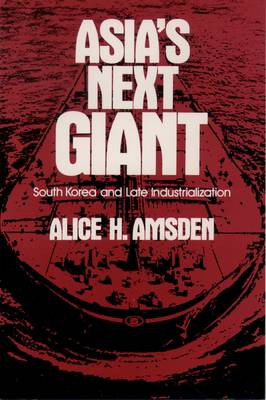
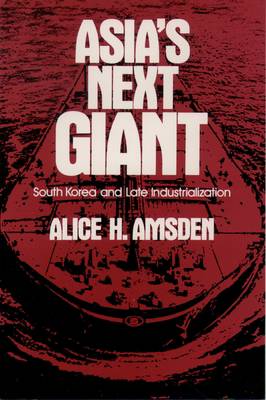
South Korea has been quietly growing into a major economic force that is even challenging some Japanese industries. This timely book examines South Korean growth as an example of "late industrialization," a process in which a nation's industries learn from earlier innovator nations, rather than innovate themselves. Discussing state intervention, shop floor management, and big business groups, Amsden explores the reasons for South Korea's phenomenal growth, paying special attention to the principle of reciprocity in which the government imposes strict performance standards on those industries and companies that it aids. She thereby shows how South Korea, Japan, and Taiwan were able to grow faster than other emerging nations such as Brazil, Turkey, India, and Mexico.
With its new insights, Asia's Next Giant is essential reading for anyone concerned with global competition and the world economy.
With its new insights, Asia's Next Giant is essential reading for anyone concerned with global competition and the world economy.
Specificaties
Betrokkenen
- Auteur(s):
- Uitgeverij:
Inhoud
- Aantal bladzijden:
- 400
- Taal:
- Engels
Eigenschappen
- Productcode (EAN):
- 9780195076035
- Verschijningsdatum:
- 9/04/1992
- Uitvoering:
- Paperback
- Formaat:
- Trade paperback (VS)
- Afmetingen:
- 141 mm x 217 mm
- Gewicht:
- 498 g


Alleen bij Standaard Boekhandel
+ 109 punten op je klantenkaart van Standaard Boekhandel
Cadeau

AANGERADEN


Beoordelingen
We publiceren alleen reviews die voldoen aan de voorwaarden voor reviews. Bekijk onze voorwaarden voor reviews.