


- Afhalen na 1 uur in een winkel met voorraad
- Gratis thuislevering in België vanaf € 30
- Ruim aanbod met 7 miljoen producten
- Afhalen na 1 uur in een winkel met voorraad
- Gratis thuislevering in België vanaf € 30
- Ruim aanbod met 7 miljoen producten





€ 158,95
+ 317 punten
Omschrijving
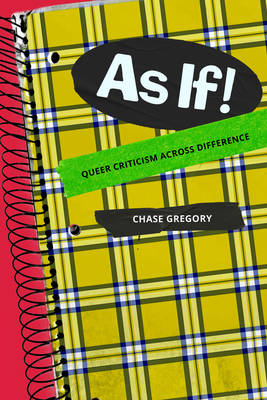
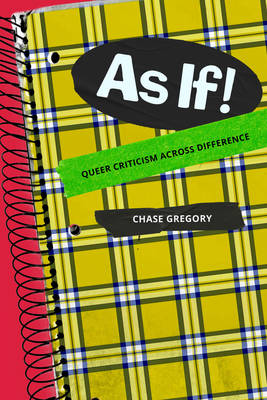
In As If!, Chase Gregory explores the stylistically strategic, often campy, and productively fraught cross-identifications of early queer criticism. Gregory calls this form of aids-era criticism as if!-a mode of writing in which authors struggle to read, write, and identify with and across categories of race, sexuality, and gender. Analyzing the work of Robert Reid-Pharr, Deborah E. McDowell, Barbara Johnson, and Eve Kosofsky Sedgwick, Gregory shows how their writing productively challenges fixed ideas of identity and knowledge production. Using these four writers as case studies of a larger trend within early queer criticism, Gregory demonstrates that even when critical attempts at relation are met by impasse, as if! criticism breaks down social relation, especially within those fields influenced by queer theory, deconstructionist feminist theory, and Black feminist theory. By advocating a return to as if! criticism as a politically useful blueprint for contemporary cultural inquiry, Gregory draws attention to the obstacles to forging identification across difference and insists on the impossible project of solidarity across such difference.
Specificaties
Betrokkenen
- Auteur(s):
- Uitgeverij:
Inhoud
- Aantal bladzijden:
- 200
- Taal:
- Engels
- Reeks:
Eigenschappen
- Productcode (EAN):
- 9781478028895
- Verschijningsdatum:
- 15/08/2025
- Uitvoering:
- Hardcover
- Formaat:
- Genaaid
- Afmetingen:
- 152 mm x 229 mm
- Gewicht:
- 439 g


Alleen bij Standaard Boekhandel
+ 317 punten op je klantenkaart van Standaard Boekhandel
CADEAU

AANGERADEN


Beoordelingen
We publiceren alleen reviews die voldoen aan de voorwaarden voor reviews. Bekijk onze voorwaarden voor reviews.