



Bedankt voor het vertrouwen het afgelopen jaar! Om jou te bedanken bieden we GRATIS verzending (in België) aan op alles gedurende de hele maand januari.
- Afhalen na 1 uur in een winkel met voorraad
- In januari gratis thuislevering in België
- Ruim aanbod met 7 miljoen producten
Bedankt voor het vertrouwen het afgelopen jaar! Om jou te bedanken bieden we GRATIS verzending (in België) aan op alles gedurende de hele maand januari.
- Afhalen na 1 uur in een winkel met voorraad
- In januari gratis thuislevering in België
- Ruim aanbod met 7 miljoen producten





Omschrijving
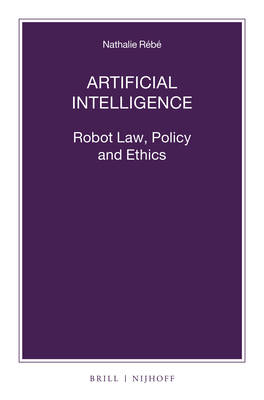
In Artificial Intelligence: Robot Law, Policy and Ethics, Dr. Nathalie Rébé discusses the legal and contemporary issues in relation to creating conscious robots. She argues that AI's physical and decision-making capacities to act on its own means having to grant it a juridical personality.
The advancement in new technologies forces us to reconsider the role Artificial Intelligence (AI) will have in our society. Sectors such as education, transportation, jobs, sex, business, the military, medical and security will be particularly affected by the development of AI.
This work provides an analysis of cases and existing regulatory tools, which could be used by lawyers in future trials. Dr. Rébé also offers a new comprehensive framework to regulate Strong AI so that 'it' can safely live among humans.
This book is a response to two questions: first, should we ban or prohibit AI; and, secondly, if not, what should be the salient features of a legal or regulatory framework for AI?
The advancement in new technologies forces us to reconsider the role Artificial Intelligence (AI) will have in our society. Sectors such as education, transportation, jobs, sex, business, the military, medical and security will be particularly affected by the development of AI.
This work provides an analysis of cases and existing regulatory tools, which could be used by lawyers in future trials. Dr. Rébé also offers a new comprehensive framework to regulate Strong AI so that 'it' can safely live among humans.
This book is a response to two questions: first, should we ban or prohibit AI; and, secondly, if not, what should be the salient features of a legal or regulatory framework for AI?
Specificaties
Betrokkenen
- Auteur(s):
- Uitgeverij:
Inhoud
- Aantal bladzijden:
- 264
- Taal:
- Engels
- Reeks:
- Reeksnummer:
- nr. 102
Eigenschappen
- Productcode (EAN):
- 9789004458093
- Verschijningsdatum:
- 9/08/2021
- Uitvoering:
- Paperback
- Formaat:
- Trade paperback (VS)
- Afmetingen:
- 154 mm x 234 mm
- Gewicht:
- 335 g


Alleen bij Standaard Boekhandel
+ 345 punten op je klantenkaart van Standaard Boekhandel
SOLDEN


Beoordelingen
We publiceren alleen reviews die voldoen aan de voorwaarden voor reviews. Bekijk onze voorwaarden voor reviews.