


- Afhalen na 1 uur in een winkel met voorraad
- Gratis thuislevering in België vanaf € 30
- Ruim aanbod met 7 miljoen producten
- Afhalen na 1 uur in een winkel met voorraad
- Gratis thuislevering in België vanaf € 30
- Ruim aanbod met 7 miljoen producten





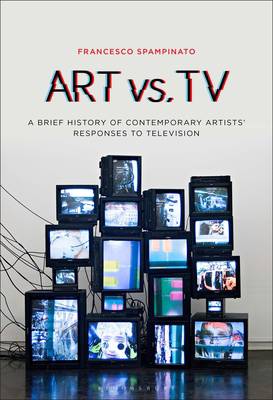
Art vs. TV
A Brief History of Contemporary Artists' Responses to Television
Francesco Spampinato
Hardcover | Engels
€ 254,45
+ 508 punten
Uitvoering
Omschrijving
While highlighting the prevailing role of television in Western societies, Art vs. TV maps and condenses a comprehensive history of the relationships of art and television. With a particular focus on the link between reality and representation, Francesco Spampinato analyzes video art works, installations, performances, interventions and television programs made by contemporary artists as forms of resistance to and appropriation and parody of mainstream television.
The artists discussed belong to different generations: those that emerged in the 1960s in association with art movements such as Pop Art, Fluxus and Happening; and those appearing on the scene in the 1980s, whose work aimed at deconstructing media representation in line with postmodernist theories; to those arriving in the 2000s, an era in which, through reality shows and the Internet, anybody could potentially become a media personality; and finally those active in the 2010s, whose work reflects on how old media like television has definitively vaporized through the electronic highways of cyberspace. These works and phenomena elicit a tension between art and television, exposing an incongruence; an impossibility not only to converge but at the very least to open up a dialogical exchange.Specificaties
Betrokkenen
- Auteur(s):
- Uitgeverij:
Inhoud
- Aantal bladzijden:
- 368
- Taal:
- Engels
Eigenschappen
- Productcode (EAN):
- 9781501370571
- Verschijningsdatum:
- 30/12/2021
- Uitvoering:
- Hardcover
- Formaat:
- Genaaid
- Afmetingen:
- 152 mm x 229 mm
- Gewicht:
- 657 g


Alleen bij Standaard Boekhandel
+ 508 punten op je klantenkaart van Standaard Boekhandel
Cadeau

AANGERADEN


Beoordelingen
We publiceren alleen reviews die voldoen aan de voorwaarden voor reviews. Bekijk onze voorwaarden voor reviews.