



Bedankt voor het vertrouwen het afgelopen jaar! Om jou te bedanken bieden we GRATIS verzending (in België) aan op alles gedurende de hele maand januari.
- Afhalen na 1 uur in een winkel met voorraad
- In januari gratis thuislevering in België
- Ruim aanbod met 7 miljoen producten
Bedankt voor het vertrouwen het afgelopen jaar! Om jou te bedanken bieden we GRATIS verzending (in België) aan op alles gedurende de hele maand januari.
- Afhalen na 1 uur in een winkel met voorraad
- In januari gratis thuislevering in België
- Ruim aanbod met 7 miljoen producten





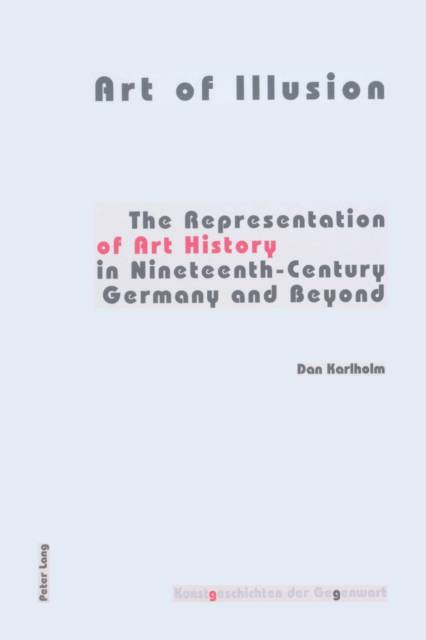
Art of Illusion
The Representation of Art History in Nineteenth-Century Germany and Beyond
Dan Karlholm
€ 185,45
+ 370 punten
Omschrijving
To survey art history as a whole was a pressing task for a generation of German scholars around the mid-nineteenth century. Their projections of a historicist chain of artworks ranged from textual narratives without illustrations, to separate picture compendia as well as images of a more allegorical kind. Other means with which to picture art history as part of a virtually all-encompassing cultural history were the museums of art erected in Germany at the time, in Berlin and Munich especially.
This book deals with practices of representing art history in various media. This includes post-Hegelian texts and engravings of art history from the 1840s onwards, by Franz Kugler, Julius Schnorr and others. In addition, works of art of the late twentieth century, by Andy Warhol, Anselm Kiefer and others, provide opportunities to speculate on the after-effects and discursive traces of the old regime. Extending the concept of historiography to include not just textual or institutional endeavours, but a host of different images as well, from reproductive prints to pop paintings and visual archives of the digital era, this study is intended to contribute in new ways to a critical historiography of the field of art history and visual culture today.
This book deals with practices of representing art history in various media. This includes post-Hegelian texts and engravings of art history from the 1840s onwards, by Franz Kugler, Julius Schnorr and others. In addition, works of art of the late twentieth century, by Andy Warhol, Anselm Kiefer and others, provide opportunities to speculate on the after-effects and discursive traces of the old regime. Extending the concept of historiography to include not just textual or institutional endeavours, but a host of different images as well, from reproductive prints to pop paintings and visual archives of the digital era, this study is intended to contribute in new ways to a critical historiography of the field of art history and visual culture today.
Specificaties
Betrokkenen
- Auteur(s):
- Uitgeverij:
Inhoud
- Aantal bladzijden:
- 278
- Taal:
- Engels
- Reeks:
- Reeksnummer:
- nr. 4
Eigenschappen
- Productcode (EAN):
- 9783039109586
- Verschijningsdatum:
- 8/03/2006
- Uitvoering:
- Paperback
- Formaat:
- Trade paperback (VS)
- Afmetingen:
- 147 mm x 224 mm
- Gewicht:
- 476 g



Alleen bij Standaard Boekhandel
+ 370 punten op je klantenkaart van Standaard Boekhandel
SOLDEN


Beoordelingen
We publiceren alleen reviews die voldoen aan de voorwaarden voor reviews. Bekijk onze voorwaarden voor reviews.