


- Afhalen na 1 uur in een winkel met voorraad
- Gratis thuislevering in België vanaf € 30
- Ruim aanbod met 7 miljoen producten
- Afhalen na 1 uur in een winkel met voorraad
- Gratis thuislevering in België vanaf € 30
- Ruim aanbod met 7 miljoen producten





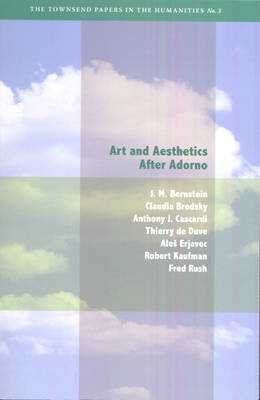
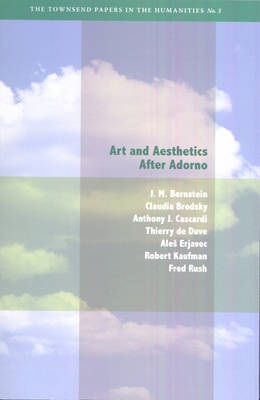
Art and Aesthetics After Adorno
J M Bernstein, Claudia Brodsky, Anthony J Cascardi, Thierry de Duve, Ales Erjavec, Robert Kaufman, Fred Rush
€ 53,45
+ 106 punten
Omschrijving
Theodor Adorno's Aesthetic Theory (1970) offers one of the most powerful and comprehensive critiques of art and of the discipline of aesthetics ever written. The work offers a deeply critical engagement with the history and philosophy of aesthetics and with the traditions of European art through the middle of the 20th century. It is coupled with ambitious claims about what aesthetic theory ought to be. But the cultural horizon of Adorno's Aesthetic Theory was the world of high modernism, and much has happened since then both in theory and in practice. Adorno's powerful vision of aesthetics calls for reconsideration in this light. Must his work be defended, updated, resisted, or simply left behind? This volume gathers new essays by leading philosophers, critics, and theorists writing in the wake of Adorno in order to address these questions. They hold in common a deep respect for the power of Adorno's aesthetic critique and a concern for the future of aesthetic theory in response to recent developments in aesthetics and its contexts.
Specificaties
Betrokkenen
- Auteur(s):
- Uitgeverij:
Inhoud
- Aantal bladzijden:
- 302
- Taal:
- Engels
- Reeks:
Eigenschappen
- Productcode (EAN):
- 9780823253098
- Verschijningsdatum:
- 1/04/2013
- Uitvoering:
- Paperback
- Formaat:
- Trade paperback (VS)
- Afmetingen:
- 152 mm x 229 mm
- Gewicht:
- 439 g


Alleen bij Standaard Boekhandel
+ 106 punten op je klantenkaart van Standaard Boekhandel
Cadeau

AANGERADEN


Beoordelingen
We publiceren alleen reviews die voldoen aan de voorwaarden voor reviews. Bekijk onze voorwaarden voor reviews.