


- Afhalen na 1 uur in een winkel met voorraad
- Gratis thuislevering in België vanaf € 30
- Ruim aanbod met 7 miljoen producten
- Afhalen na 1 uur in een winkel met voorraad
- Gratis thuislevering in België vanaf € 30
- Ruim aanbod met 7 miljoen producten





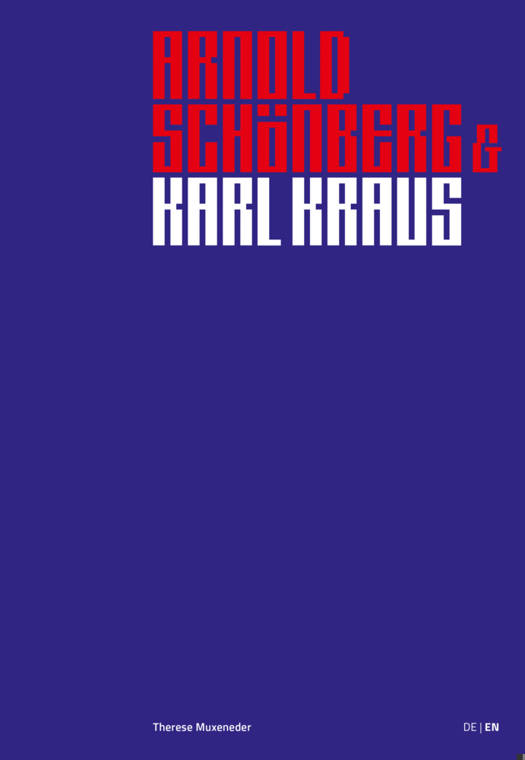
Arnold Schönberg & Karl Kraus
Therese Muxeneder
€ 35,45
+ 70 punten
Eenvoudig bestellen
Veilig betalen


Gratis thuislevering vanaf € 30 (via bpost)
Gratis levering in je Standaard Boekhandel
Omschrijving
"It is remarkable and significant that these two men both emerged out of the Austrian decadence in 1874 - both of them destined to cause a truly salutary disturbance of vital importance to European culture." (Ernst Krenek, 1934)On the occasion of the 150th birthdays of Arnold Schönberg and Karl Kraus, the intellectual affinities of two of the most influential figures of Viennese Modernism are highlighted for the first time in a publication. The musical visionary Schönberg and the media-critical writer Kraus inscribed themselves in an era rich in artistic, social and political explosions.Advocating progress in music, Schönberg embodied the courage to break with conventions. In keeping with the interdisciplinary orientation of Viennese Modernism, the composer also expressed himself as a writer and painter. As a censor of language, Kraus fought an unrelenting battle against corrupting newspaper phrases, double standards and esthetic uniformity. The two jubilarians were united by an unspoken understanding of artistic and social matters, and by a shared ethical program which aimed at a claim to truth in all areas of art.The correspondence between Schönberg and Kraus, edited and commented in full for the first time, reveals parallels, but also discontinuities and ruptures in an acquaintance that lasted over four decades. Contemporary testimonies from the fields of architecture, poetry, painting and music form the basis of a cross-media panorama of intellectual and artistic crossroads.New music in Vienna around 1900 is addressed in the publication, as is the influence of the reader Kraus on Schönberg's aesthetics of Sprechstimme. In style and ideas, the composer proves to be a prolific reader of the legendary periodical "Die Fackel" published by Kraus. Schönberg and Kraus shared the experience of an eventful conditio Judaica in the shadow of rising National Socialism. Schönberg's emigration to the USA in the fall of 1933 marked a turning point in the relationship between the two Viennese artists. Schönberg's exile library proves that Kraus remained a key reference for him.
Specificaties
Betrokkenen
- Auteur(s):
- Uitgeverij:
Inhoud
- Taal:
- Duits, Engels
- Reeks:
Eigenschappen
- Productcode (EAN):
- 9783967079203
- Verschijningsdatum:
- 19/03/2024
- Uitvoering:
- Hardcover
- Afmetingen:
- 160 mm x 25 mm
- Gewicht:
- 591 g


Alleen bij Standaard Boekhandel
+ 70 punten op je klantenkaart van Standaard Boekhandel
CADEAU

AANGERADEN


Beoordelingen
We publiceren alleen reviews die voldoen aan de voorwaarden voor reviews. Bekijk onze voorwaarden voor reviews.