


- Afhalen na 1 uur in een winkel met voorraad
- Gratis thuislevering in België vanaf € 30
- Ruim aanbod met 7 miljoen producten
- Afhalen na 1 uur in een winkel met voorraad
- Gratis thuislevering in België vanaf € 30
- Ruim aanbod met 7 miljoen producten





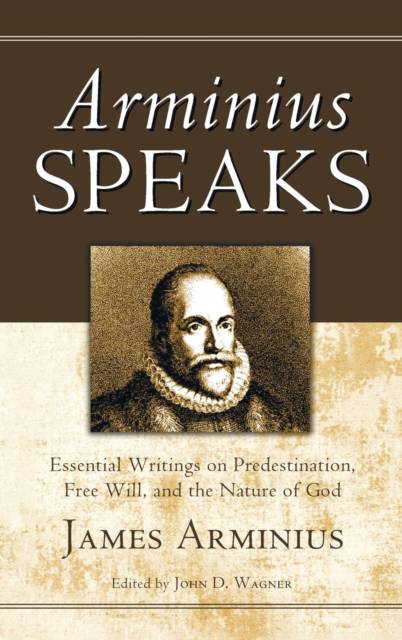
Arminius Speaks
Essential Writings on Predestination, Free Will, and the Nature of God
James Arminius
Hardcover | Engels
€ 108,45
+ 216 punten
Uitvoering
Omschrijving
James Arminius is one of the most maligned and misunderstood theologians in church history. In an era of major debate over predestination, free will, and related concepts, Arminius was accused of being Pelagian, Semi-Pelagian, or a heretic of all sorts. This is a trend that started in his time and has continued to this day. The truth is that he was a brilliant theologian who shook the foundations of Calvinism to the core. Yet he was quite orthodox in his thinking, as he had come right out of the Protestant Reformation, though he sought to reform some ideas of Calvin and Luther. Contrary to common belief, Arminius believed in the utter depravity of man and that a major work of grace, i.e., prevenient grace, is necessary to bring a person to repentance. He also emphatically rejected Pelagianism and Semi-Pelagianism. He thoroughly answers every accusation against him and masterfully refutes William Perkins, a major Calvinist writer of that time. How do we ultimately understand what he thought? By carefully reading his writings. Until now, this was not an easy task. The only way has been to wade through his three-volume "Works," totaling 2, 300 pages. Hence the need for a compendium of some of his best writings, edited for modern readers. Our hope is to help a new generation of Christians understand this much-misunderstood theologian, an understanding especially needed in an era in which Calvinism is experiencing a major resurgence.
Specificaties
Betrokkenen
- Auteur(s):
- Uitgeverij:
Inhoud
- Aantal bladzijden:
- 406
- Taal:
- Engels
Eigenschappen
- Productcode (EAN):
- 9781498258883
- Verschijningsdatum:
- 6/12/2010
- Uitvoering:
- Hardcover
- Formaat:
- Genaaid
- Afmetingen:
- 152 mm x 229 mm
- Gewicht:
- 712 g


Alleen bij Standaard Boekhandel
+ 216 punten op je klantenkaart van Standaard Boekhandel
Cadeau

AANGERADEN


Beoordelingen
We publiceren alleen reviews die voldoen aan de voorwaarden voor reviews. Bekijk onze voorwaarden voor reviews.