



Bedankt voor het vertrouwen het afgelopen jaar! Om jou te bedanken bieden we GRATIS verzending (in België) aan op alles gedurende de hele maand januari.
- Afhalen na 1 uur in een winkel met voorraad
- In januari gratis thuislevering in België
- Ruim aanbod met 7 miljoen producten
Bedankt voor het vertrouwen het afgelopen jaar! Om jou te bedanken bieden we GRATIS verzending (in België) aan op alles gedurende de hele maand januari.
- Afhalen na 1 uur in een winkel met voorraad
- In januari gratis thuislevering in België
- Ruim aanbod met 7 miljoen producten





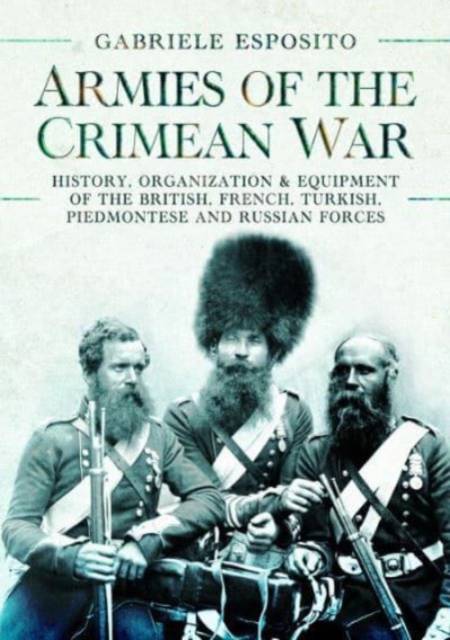
Armies of the Crimean War, 1853-1856
History, Organization and Equipment of the British, French, Turkish, Piedmontese and Russian Forces
Gabriele Esposito
Hardcover | Engels
€ 34,95
+ 69 punten
Omschrijving
Lavishly illustrated with over 100 illustrations that detail the composition, organization, uniforms, weapons and equipment of each force.
The Crimean War was the first major European war since the end of the Napoleonic Wars and Britain's only war on that continent in the century between Waterloo and WW1. When Russia invaded provinces of the Ottoman Empire, the British and French, later joined by the Kingdom of Piedmont-Sardinia, intervened to limit Russian expansion towards the Black Sea.
Each of the armies contained an eclectic mix of units. The regular European regiments still displayed much of the bright color and finery associated with the Napoleonic era (the British infantry in their scarlet tunics forming the famous 'thin red line' at Balaklava for instance), while each also contained a mix of exotic units drawn from across their respective empires. The French fielded Zouaves and Spahis from North and West Africa, not to mention the legendary Foreign Legion; the Ottomans had Tunisians and Egyptians alongside Balkan mountaineers and the infamous Bashi-bazouks; the Russians of course had their Cossacks and the British fielded little-known German, Swiss and Italian mercenaries. Gabriele Esposito details the composition, organization, uniforms and weaponry of each force and illustrates many of them with early black and white photos (this being the first major war for which photography was available), as well as numerous color artworks.
The Crimean War was the first major European war since the end of the Napoleonic Wars and Britain's only war on that continent in the century between Waterloo and WW1. When Russia invaded provinces of the Ottoman Empire, the British and French, later joined by the Kingdom of Piedmont-Sardinia, intervened to limit Russian expansion towards the Black Sea.
Each of the armies contained an eclectic mix of units. The regular European regiments still displayed much of the bright color and finery associated with the Napoleonic era (the British infantry in their scarlet tunics forming the famous 'thin red line' at Balaklava for instance), while each also contained a mix of exotic units drawn from across their respective empires. The French fielded Zouaves and Spahis from North and West Africa, not to mention the legendary Foreign Legion; the Ottomans had Tunisians and Egyptians alongside Balkan mountaineers and the infamous Bashi-bazouks; the Russians of course had their Cossacks and the British fielded little-known German, Swiss and Italian mercenaries. Gabriele Esposito details the composition, organization, uniforms and weaponry of each force and illustrates many of them with early black and white photos (this being the first major war for which photography was available), as well as numerous color artworks.
Specificaties
Betrokkenen
- Auteur(s):
- Uitgeverij:
Inhoud
- Aantal bladzijden:
- 208
- Taal:
- Engels
Eigenschappen
- Productcode (EAN):
- 9781399089852
- Verschijningsdatum:
- 23/11/2023
- Uitvoering:
- Hardcover
- Formaat:
- Genaaid
- Afmetingen:
- 173 mm x 246 mm
- Gewicht:
- 796 g


Alleen bij Standaard Boekhandel
+ 69 punten op je klantenkaart van Standaard Boekhandel
SOLDEN


Beoordelingen
We publiceren alleen reviews die voldoen aan de voorwaarden voor reviews. Bekijk onze voorwaarden voor reviews.