


- Afhalen na 1 uur in een winkel met voorraad
- Gratis thuislevering in België vanaf € 30
- Ruim aanbod met 7 miljoen producten
- Afhalen na 1 uur in een winkel met voorraad
- Gratis thuislevering in België vanaf € 30
- Ruim aanbod met 7 miljoen producten





€ 67,95
+ 135 punten
Uitvoering
Eenvoudig bestellen
Veilig betalen


Gratis thuislevering vanaf € 30 (via bpost)
Gratis levering in je Standaard Boekhandel
Omschrijving
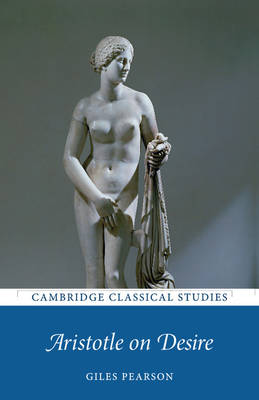
Desire is a central concept in Aristotle's ethical and psychological works, but he does not provide us with a systematic treatment of the notion itself. This book reconstructs the account of desire latent in his various scattered remarks on the subject and analyses its role in his moral psychology. Topics include: the range of states that Aristotle counts as desires (orexeis); objects of desire (orekta) and the relation between desires and envisaging prospects; desire and the good; Aristotle's three species of desire: epithumia (pleasure-based desire), thumos (retaliatory desire) and boulêsis (good-based desire - in a narrower notion of 'good' than that which connects desire more generally to the good); Aristotle's division of desires into rational and non-rational; Aristotle and some current views on desire; and the role of desire in Aristotle's moral psychology. The book will be of relevance to anyone interested in Aristotle's ethics or psychology.
Specificaties
Betrokkenen
- Auteur(s):
- Uitgeverij:
Inhoud
- Aantal bladzijden:
- 288
- Taal:
- Engels
- Reeks:
Eigenschappen
- Productcode (EAN):
- 9781316628829
- Verschijningsdatum:
- 29/09/2016
- Uitvoering:
- Paperback
- Formaat:
- Trade paperback (VS)
- Afmetingen:
- 140 mm x 216 mm
- Gewicht:
- 335 g


Alleen bij Standaard Boekhandel
+ 135 punten op je klantenkaart van Standaard Boekhandel
CADEAU

AANGERADEN


Beoordelingen
We publiceren alleen reviews die voldoen aan de voorwaarden voor reviews. Bekijk onze voorwaarden voor reviews.