


- Afhalen na 1 uur in een winkel met voorraad
- Gratis thuislevering in België vanaf € 30
- Ruim aanbod met 7 miljoen producten
- Afhalen na 1 uur in een winkel met voorraad
- Gratis thuislevering in België vanaf € 30
- Ruim aanbod met 7 miljoen producten





Omschrijving
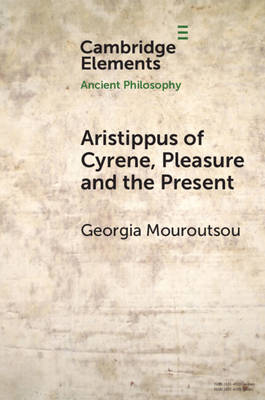
This Element offers a new historical account of Aristippus the Elder's views on pleasure and the present. Instead of treating Aristippus as merely proto-Cyrenaic or anachronistically modern, it uncovers in the ancient sources a neglected form of hedonism that endorses a present-focused therapeutic policy, while exploring its underlying motivations. Aristippan hedonism promotes a moment-to-moment disposition to pleasure rather than its maximization through future calculation, supporting a euthymic model of well-being that prioritizes the present. After distinguishing Aristippus from the later Cyrenaics regarding hedonic calculations to maximize pleasure, the Element yet supports continuity with his followers in the cognitive elements of the concept and the experience of pleasure, challenging his alleged sensualism in this way. Once the historical groundwork is in place, the Element introduces the hypothesis of the plasticity of the present, which moves beyond historical interpretation to offer an ethical-psychological account of a sustained focus on present time.
Specificaties
Betrokkenen
- Auteur(s):
- Uitgeverij:
Inhoud
- Aantal bladzijden:
- 80
- Taal:
- Engels
- Reeks:
Eigenschappen
- Productcode (EAN):
- 9781009766692
- Verschijningsdatum:
- 8/01/2026
- Uitvoering:
- Paperback
- Formaat:
- Trade paperback (VS)
- Afmetingen:
- 152 mm x 229 mm
- Gewicht:
- 117 g


Alleen bij Standaard Boekhandel
+ 48 punten op je klantenkaart van Standaard Boekhandel
Cadeau

AANGERADEN


Beoordelingen
We publiceren alleen reviews die voldoen aan de voorwaarden voor reviews. Bekijk onze voorwaarden voor reviews.