


- Afhalen na 1 uur in een winkel met voorraad
- Gratis thuislevering in België vanaf € 30
- Ruim aanbod met 7 miljoen producten
- Afhalen na 1 uur in een winkel met voorraad
- Gratis thuislevering in België vanaf € 30
- Ruim aanbod met 7 miljoen producten





€ 98,45
+ 196 punten
Omschrijving
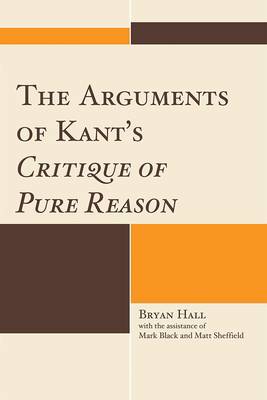
The importance of Immanuel Kant's Critique of Pure Reason in the history of philosophy is matched only by its difficulty. In particular, readers are often frustrated by how difficult it is to extract Kant's arguments from his dense prose. This book reconstructs, using the tools of propositional logic, the central arguments of the Critique. In all, the book reconstructs thirty-six of Kant's arguments spanning the Transcendental Aesthetic, Transcendental Analytic, and Transcendental Dialectic. For each argument, they begin with a quote from Kant's text followed by a synopsis that explains the argument informally. Finally, each synopsis is followed by a formal reconstruction of the argument. The synopses offer examples, metaphors, historical background, and objections/responses to aid the reader in appreciating Kant's arguments. Even though many readers who approach Kant for the first time have a good philosophical vocabulary, few will understand Kant's unique lexicon. In addition to formally reconstructing Kant's arguments, the book also includes a glossary that defines the technical terms that Kant uses in his arguments. Finally, since this book is directed largely at students, Bryan Hall enlisted two of his own students to ensure that the book is maximally student friendly. In contrast to most pedagogical philosophical literature, the content of this book has been tailored by students for students.
Specificaties
Betrokkenen
- Auteur(s):
- Uitgeverij:
Inhoud
- Aantal bladzijden:
- 242
- Taal:
- Engels
Eigenschappen
- Productcode (EAN):
- 9780739141663
- Verschijningsdatum:
- 18/12/2010
- Uitvoering:
- Paperback
- Formaat:
- Trade paperback (VS)
- Afmetingen:
- 150 mm x 226 mm
- Gewicht:
- 376 g


Alleen bij Standaard Boekhandel
+ 196 punten op je klantenkaart van Standaard Boekhandel
Cadeau

AANGERADEN


Beoordelingen
We publiceren alleen reviews die voldoen aan de voorwaarden voor reviews. Bekijk onze voorwaarden voor reviews.