


- Afhalen na 1 uur in een winkel met voorraad
- Gratis thuislevering in België vanaf € 30
- Ruim aanbod met 7 miljoen producten
- Afhalen na 1 uur in een winkel met voorraad
- Gratis thuislevering in België vanaf € 30
- Ruim aanbod met 7 miljoen producten





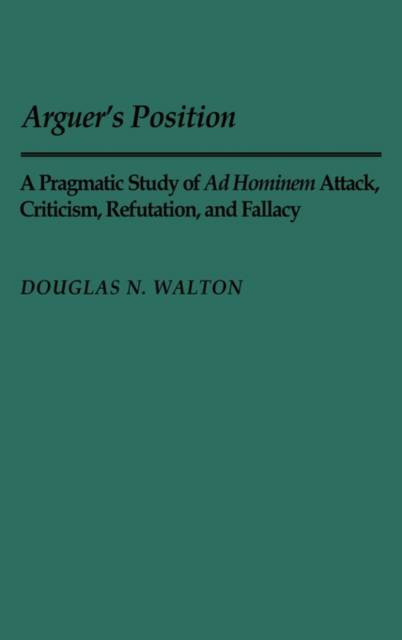
Arguer's Position
A Pragmatic Study of AD Hominem Attack, Criticism, Refutation, and Fallacy
Douglas N Walton
€ 169,95
+ 339 punten
Omschrijving
Douglas N. Walton considers the question of whether the conventions of informal conversation can be articulated more precisely than they are at present. Specifically, he addresses the problem of the fallacy of ad hominem argumentation as it occurs in natural settings. Can rules be formulated to determine if criticisms of apparent hypocrisy in an argument are defensible or refutable? Walton suggests that they can, and ultimately defends the thesis that ad hominem reasoning is not fallacious per se. He carries his analysis to the core of action--theoretic reasoning--by examining a number of specimen arguments. As suggested by the title, the conclusion of ad hominem argument is demonstrated to be relative to the arguer's position. In the appendixes of the book, articles by Gerald McAuliffe and Gordon R. Lowe illustrate vivid and powerful cases in which Walton's contentions are put to the test.
Specificaties
Betrokkenen
- Auteur(s):
- Uitgeverij:
Inhoud
- Aantal bladzijden:
- 346
- Taal:
- Engels
- Reeks:
Eigenschappen
- Productcode (EAN):
- 9780313244391
- Verschijningsdatum:
- 19/02/1985
- Uitvoering:
- Hardcover
- Formaat:
- Genaaid
- Afmetingen:
- 156 mm x 234 mm
- Gewicht:
- 657 g


Alleen bij Standaard Boekhandel
+ 339 punten op je klantenkaart van Standaard Boekhandel
Cadeau

AANGERADEN


Beoordelingen
We publiceren alleen reviews die voldoen aan de voorwaarden voor reviews. Bekijk onze voorwaarden voor reviews.