


- Afhalen na 1 uur in een winkel met voorraad
- Gratis thuislevering in België vanaf € 30
- Ruim aanbod met 7 miljoen producten
- Afhalen na 1 uur in een winkel met voorraad
- Gratis thuislevering in België vanaf € 30
- Ruim aanbod met 7 miljoen producten





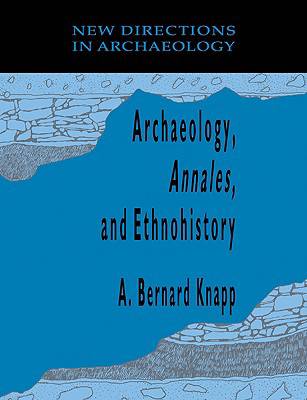
Archaeology, Annales, and Ethnohistory
€ 67,95
+ 135 punten
Omschrijving
This collection considers the relevance of the Annales 'school' for archaeology. The Annales movement regarded orthodox history as too much concerned with events, too narrowly political, too narrative in form and too isolated from neighbouring disciplines. Annalistes attempted to construct a 'total' history, dealing with a wide range of human activity, and combining divergent material, documentary, and theoretical approaches to the past. Annales-oriented research utilizes the techniques and tools of various ancillary fields, and integrates temporal, spatial, material and behavioural analyses. Such an approach is obviously attractive to archaeologists, for even though they deal with material data rather than social facts, they are just as much as historians interested in understanding social, economic and political factors such as power and dominance, conflict, exchange and other human activities. Three introductory essays consider the relationship between Annales methodology and current archaeological theory. Case studies draw upon methodological variations of the multifaceted Annales approach. The volume concludes with two overviews, one historical and the other archaeological.
Specificaties
Betrokkenen
- Uitgeverij:
Inhoud
- Aantal bladzijden:
- 172
- Taal:
- Engels
- Reeks:
Eigenschappen
- Productcode (EAN):
- 9780521102605
- Verschijningsdatum:
- 12/03/2009
- Uitvoering:
- Paperback
- Formaat:
- Trade paperback (VS)
- Afmetingen:
- 189 mm x 246 mm
- Gewicht:
- 317 g

Alleen bij Standaard Boekhandel
+ 135 punten op je klantenkaart van Standaard Boekhandel
Cadeau

AANGERADEN


Beoordelingen
We publiceren alleen reviews die voldoen aan de voorwaarden voor reviews. Bekijk onze voorwaarden voor reviews.