



Bedankt voor het vertrouwen het afgelopen jaar! Om jou te bedanken bieden we GRATIS verzending (in België) aan op alles gedurende de hele maand januari.
- Afhalen na 1 uur in een winkel met voorraad
- In januari gratis thuislevering in België
- Ruim aanbod met 7 miljoen producten
Bedankt voor het vertrouwen het afgelopen jaar! Om jou te bedanken bieden we GRATIS verzending (in België) aan op alles gedurende de hele maand januari.
- Afhalen na 1 uur in een winkel met voorraad
- In januari gratis thuislevering in België
- Ruim aanbod met 7 miljoen producten





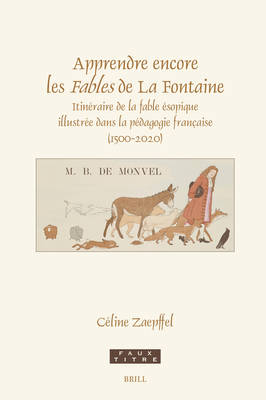
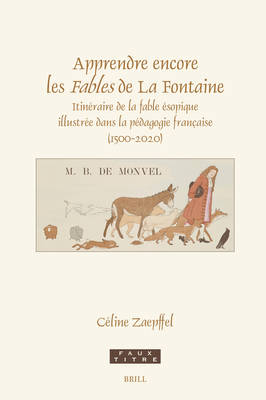
Apprendre Encore Les Fables de la Fontaine
Itinéraire de la Fable Ésopique Illustrée Dans La Pédagogie Française (1500-2020)
Céline Zaepffel
€ 219,45
+ 438 punten
Omschrijving
Qui n'a jamais récité une fable de Jean de La Fontaine à l'école, sans se douter qu'elles n'ont pas été écrites pour les enfants ?
Le présent ouvrage explore ce paradoxe, en analysant près de 260 éditions illustrées des fables ésopiques publiées pour la jeunesse entre 1500 et 2020. Ces éditions révèlent que, bien au-delà de leur leçon morale, les fables sont devenues un pilier de l'éducation française. De l'histoire de leur institutionnalisation dans les écoles républicaines à leur adaptation constante que permettent leurs illustrations, ce livre éclaire le lien entre texte, image et pédagogie. Premier ouvrage à traiter ce corpus en profondeur, il questionne l'impact historique et social des Fables dans la formation des jeunes Français et Françaises.
Did you know that, in France, children memorize and recite fables at least once during their schooling? Yet, these fables were not even written for children. This book explores this paradox by analysing nearly 260 illustrated editions of Aesopian fables published for young readers between 1500 and 2020. These editions reveal that, far beyond their moral lessons, fables have become a cornerstone of French education. From their institutionalization in republican schools to their constant adaptation through illustrations, this book sheds light on the connection between text, image, and pedagogy. As the first in-depth study of this corpus, it questions the historical and social impact of fables in shaping the education of French children over the centuries.
Le présent ouvrage explore ce paradoxe, en analysant près de 260 éditions illustrées des fables ésopiques publiées pour la jeunesse entre 1500 et 2020. Ces éditions révèlent que, bien au-delà de leur leçon morale, les fables sont devenues un pilier de l'éducation française. De l'histoire de leur institutionnalisation dans les écoles républicaines à leur adaptation constante que permettent leurs illustrations, ce livre éclaire le lien entre texte, image et pédagogie. Premier ouvrage à traiter ce corpus en profondeur, il questionne l'impact historique et social des Fables dans la formation des jeunes Français et Françaises.
Did you know that, in France, children memorize and recite fables at least once during their schooling? Yet, these fables were not even written for children. This book explores this paradox by analysing nearly 260 illustrated editions of Aesopian fables published for young readers between 1500 and 2020. These editions reveal that, far beyond their moral lessons, fables have become a cornerstone of French education. From their institutionalization in republican schools to their constant adaptation through illustrations, this book sheds light on the connection between text, image, and pedagogy. As the first in-depth study of this corpus, it questions the historical and social impact of fables in shaping the education of French children over the centuries.
Specificaties
Betrokkenen
- Auteur(s):
- Uitgeverij:
Inhoud
- Aantal bladzijden:
- 412
- Taal:
- Frans
- Reeks:
- Reeksnummer:
- nr. 467
Eigenschappen
- Productcode (EAN):
- 9789004726185
- Verschijningsdatum:
- 10/04/2025
- Uitvoering:
- Hardcover
- Formaat:
- Genaaid
- Afmetingen:
- 157 mm x 239 mm
- Gewicht:
- 997 g


Alleen bij Standaard Boekhandel
+ 438 punten op je klantenkaart van Standaard Boekhandel
SOLDEN


Beoordelingen
We publiceren alleen reviews die voldoen aan de voorwaarden voor reviews. Bekijk onze voorwaarden voor reviews.